

Meta stock platforms beat third-quarter revenue expectations.
Meta stock is in focus in October 2026 after Meta Platforms reported strong third-quarter revenue growth, announced a new class of non-voting shares, and increased its minimum capital expenditure outlook for the year. Revenue climbed 26% year over year, but rising expenses, a major legal charge, and heavy investment in artificial intelligence have created new questions about the company’s profitability and financial flexibility.
Meta’s latest results present two sides of the investment story. Its advertising business continues to grow, and AI-powered recommendations are supporting engagement and monetisation. At the same time, the cost of expanding computing infrastructure is putting pressure on cash flow.
Alsoo join with us to know the latest

For investors following Meta stock (NASDAQ: META), the central question is whether future revenue and profit growth can justify the company’s expanding AI investments.
This analysis covers Meta’s Q3 2026 earnings, stock-price decline, AI strategy, new share class, financial outlook, and the risks investors should consider.
Meta Platforms’ AI Story Gains Traction After Q3 Revenue Beat
Meta’s third-quarter results provided evidence that its AI investments are supporting its established advertising business. The company reported revenue of $64.60 billion for the quarter ended September 30, 2026, representing 26% growth compared with the same period in 2025.
AI plays an important role in Meta’s content recommendation systems, advertising delivery, and consumer-facing products. Better recommendations can help users discover relevant content, while improvements in advertising systems can help businesses reach potential customers.
Meta also reported that the average daily active people across its family of applications reached 3.64 billion in September 2026, up 3% year over year. Advertising impressions increased by 10%, while the average price per advertisement rose by 14%.
These figures indicate that Meta’s advertising business continues to benefit from audience reach, advertising volume, and pricing. However, they do not prove that every AI investment will generate an attractive financial return.
Investors should distinguish between measurable improvements in the existing business and future opportunities that still depend on product adoption, monetisation, and execution.
Meta Shares Slide 6% as Investors Assess AI Spending
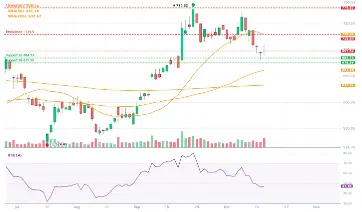
Meta shares fell approximately 6% on October 22, 2026, according to market reporting, as investors reassessed the company’s spending plans and the financial implications of its AI expansion. The decline followed the company’s quarterly earnings announcement and highlighted concerns about the cost of competing in AI. https://www.reuters.com/business/metas-credit-risk-indicator-jumps-record-high-after-results-2026-10-22/
A revenue beat does not guarantee that a stock price will rise. Investors also evaluate operating margins, future expenses, capital requirements, cash generation, and management’s guidance.
Meta expects to spend heavily on data centers, computing equipment, networking infrastructure, and AI-related development. These investments may help the company improve its products and defend its competitive position, but the financial benefits may take time to materialise.
The share-price decline should not be interpreted as proof that Meta’s core business is deteriorating. Instead, it reflects a market reassessment of the balance between the company’s growth opportunities and the cost of pursuing them.
For long-term investors, future earnings reports will help show whether Meta can convert its infrastructure spending into sustainable financial returns.
Meta Platforms, Inc.: Company Overview
Meta Platforms, Inc. operates Facebook, Instagram, WhatsApp, Messenger, and other digital services. Its business includes social networking, messaging, digital advertising, artificial intelligence, and virtual and augmented reality products.
Advertising is the company’s primary revenue source. Businesses pay to reach audiences across Meta’s platforms, while its recommendation and advertising systems help determine which content and advertisements users see.
The company is also developing AI models and products that may create additional opportunities. These investments could improve existing services, introduce new consumer experiences, and help businesses communicate with customers.
However, Meta faces competition from other technology companies investing in AI, as well as regulatory scrutiny and the challenge of maintaining user engagement.
Meta stock therefore represents exposure to an established advertising business and a substantial investment in future AI capabilities. Investors need to evaluate both sides of that business.
Meta Stock: Key Q3 2026 Financial Results
Meta’s latest financial report showed substantial revenue growth alongside higher costs and lower operating income.
| Financial metric | Q3 2026 result |
|---|---|
| Revenue | $64.60 billion |
| Year-over-year revenue growth | 26% |
| Costs and expenses | $51.61 billion |
| Operating income | $12.99 billion |
| Operating margin | 20% |
| Net income | $9.86 billion |
| Diluted earnings per share | $3.83 |
| Operating cash flow | $32.79 billion |
| Free cash flow | -$2.12 billion |
| Cash, cash equivalents, and marketable securities | $82.45 billion |
Source: Meta’s official Q3 2026 earnings release.
Revenue increased from $51.24 billion in Q3 2025 to $64.60 billion in Q3 2026. However, total costs and expenses rose from $30.71 billion to $51.61 billion.
Operating income declined from $20.54 billion to $12.99 billion, while the operating margin fell from 40% to 20%.
A significant factor was a $9.89 billion legal charge related to Meta’s agreement with 52 U.S. state attorneys general concerning litigation over teen mental health and social media. Meta stated that excluding this charge, operating income would have been $22.88 billion and diluted earnings per share would have been $7.40.
That adjustment provides context, but investors should consider both reported and adjusted figures. The legal charge affected the quarter’s results, while infrastructure investment and other expenses remain important considerations for future profitability.
Meta Reports a Q3 Revenue Beat and Strong Q4 Guidance
Meta’s revenue exceeded the upper end of its previous quarterly revenue guidance, according to its earnings release. The company also issued a fourth-quarter 2026 revenue outlook of $73 billion to $76 billion. https://investor.atmeta.com/investor-news/press-release-details/2026/Meta-Reports-Third-Quarter-2026-Results/default.aspx
The forecast suggests that management expects its business momentum to continue. Advertising demand, user engagement, and the effectiveness of its recommendation systems will remain important drivers.
Meta also expects total expenses for 2026 to reach $175 billion to $179 billion, incorporating the legal charge recognized during the third quarter.
Its 2026 capital expenditure forecast, including principal payments on finance leases, is now $135 billion to $145 billion. The lower end of that range increased from the previous $130 billion outlook.
These projections are management estimates rather than guarantees. Advertising conditions, legal developments, infrastructure requirements, and competition could affect actual results.
Investors should compare future quarterly results with the company’s guidance to assess whether revenue growth is keeping pace with spending.
Meta and Chip Stocks Decline as AI Investment Concerns Spread
Meta’s spending concerns are part of a wider debate about the cost of building AI infrastructure. Large technology companies need data centers, advanced chips, networking equipment, and substantial electricity capacity to develop and operate AI systems.
When investors question whether these investments will generate sufficient returns, market sentiment can weaken across technology companies and suppliers.
Meta differs from a semiconductor manufacturer because its main established business is digital advertising rather than chip sales. Nevertheless, both businesses can be affected by changing expectations about AI demand and infrastructure spending.
Higher borrowing costs, market volatility, and uncertainty about future profitability can also influence technology valuations.
For investors, the important distinction is between spending that supports measurable business growth and spending whose financial benefits remain uncertain. Meta’s advertising performance offers evidence of current AI-related benefits, but its broader investment program still requires careful evaluation.
Meta’s New Class C Shares: Is It a Traditional Stock Split?
Meta announced the establishment of a new publicly listed Class C common stock that carries no voting rights, with the arrangement scheduled to take effect in January 2027.
The announced distribution provides one new Class C share for each outstanding Class A or Class B share. The structure has been described as having an economic effect similar to a two-for-one stock split for Class A shares, but it is not simply a conventional stock split because it introduces a separate class of non-voting shares.
The new share class could give Meta additional flexibility to raise capital, compensate employees, or use shares in acquisitions. Because the new Class C shares do not carry votes, the arrangement also differs from issuing additional voting shares.
Investors should understand that a share distribution does not automatically increase the underlying value of a business. The economic effect depends on the terms of the arrangement, the number of shares outstanding, market pricing, and future company performance.
Before making decisions based on the announcement, shareholders should review the official Meta investor-relations release for the terms and effective date.
Meta’s AI Infrastructure Spending and Long-Term Commitments
Meta’s AI expansion requires more than buying individual processors. The company needs data centers, servers, networking systems, leased infrastructure, and arrangements with external computing providers.
Its annual capital expenditure forecast for 2026 is $135 billion to $145 billion, including principal payments on finance leases. That figure represents the company’s expected infrastructure-related spending under its stated guidance.
Long-term contractual commitments are a separate measure. Meta’s second-quarter 2026 SEC filing reported approximately $349.31 billion in non-cancelable contractual commitments as of June 30, 2026. The filing also disclosed approximately $278.99 billion in lease obligations for leases that had not yet commenced, along with additional data-center leases entered into in July 2026.
These figures describe different obligations and should not be combined without examining their definitions, dates, and possible overlap. They also should not be confused with the amount Meta will spend during a single year.
The figures illustrate the scale of infrastructure planning behind Meta’s AI strategy. Long-term agreements can secure computing capacity needed for growth, but they may also reduce financial flexibility and create payment obligations extending over several years.
Investors should monitor future SEC filings for updated commitments, scheduled payments, financing arrangements, and changes in capital expenditure guidance.
Meta’s AI Products and Muse: Potential Growth Opportunities
Meta’s AI initiatives may create opportunities beyond improving its existing advertising systems. New AI models and products, including initiatives associated with Muse, could support consumer experiences, content discovery, business messaging, and other services.
The financial impact will depend on adoption and monetization. A new AI product may attract users without immediately generating meaningful revenue. It may also require substantial computing resources and ongoing development costs.
Advertising remains a more established source of revenue. Improvements in ad relevance, campaign performance, and recommendation systems can potentially strengthen the business Meta already operates.
Investors should therefore separate demonstrated operating improvements from expectations about future AI products. Evidence such as user adoption, advertiser demand, incremental revenue, and cost efficiency will help determine whether new initiatives justify their investment.
The key question is not simply how much Meta spends on AI, but whether those investments create durable business value.
Meta’s Advertising Business Remains a Major Strength
Meta’s advertising business remains central to its financial performance.
During Q3 2026, the company reported a 10% year-over-year increase in advertising impressions and a 14% rise in the average price per advertisement. Average daily active people across its family of applications reached 3.64 billion in September, up 3% from the previous year.
These figures suggest that Meta continued to benefit from both the size of its audience and its ability to monetize engagement.
AI-powered recommendations can help users find content they are more likely to enjoy, while advertising systems can help businesses reach relevant audiences. These improvements may increase the value advertisers receive from Meta’s platforms.
However, advertising remains sensitive to economic conditions, privacy rules, competition, and changes in marketing budgets. Meta must continue to attract users and demonstrate advertising effectiveness to sustain its growth.
Meta’s Rising Costs and Profitability Risks
Revenue growth is only one part of the financial picture. Investors also need to understand how much the company spends to generate that revenue.
Meta’s total costs and expenses rose 68% year over year in Q3 2026. The reported operating margin declined to 20%, compared with 40% in the same quarter of 2025.
The legal charge accounted for a substantial portion of the increase, but the company’s broader infrastructure and AI investment plans also deserve attention.
Several indicators will help investors assess Meta’s profitability over coming quarters:
- Revenue growth: Whether advertising and other revenue continue to expand.
- Operating margin: Whether costs grow more slowly than revenue after accounting for unusual expenses.
- Capital expenditure: Whether infrastructure spending remains within management’s outlook.
- Cash generation: Whether operating cash flow can support investment and other financial obligations.
- AI monetization: Whether new capabilities deliver measurable improvements in advertising or create additional revenue.
These measures provide a more complete picture than revenue growth or a single analyst price target.
Meta Stock: Cash Flow and Financial Flexibility
Cash flow is especially important for a company investing heavily in infrastructure.
Meta reported $32.79 billion in operating cash flow for Q3 2026. Capital expenditure, including principal payments on finance leases, was $34.91 billion, resulting in negative free cash flow of $2.12 billion under the company’s reported measure.
Meta also held $82.45 billion in cash, cash equivalents, and marketable securities at September 30, 2026.
Negative free cash flow in one quarter does not automatically indicate financial distress. Infrastructure spending can be uneven, and the timing of purchases may affect quarterly figures. However, continued spending above operating cash generation would be important to monitor.
Investors should compare cash flow across multiple quarters, examine borrowing and lease obligations, and assess whether the company can fund its expansion while maintaining financial flexibility.
Meta’s cash reserves provide context, but they should not be considered in isolation from future spending requirements.
Reality Labs Adds Another Layer of Investment Risk
Meta’s Reality Labs division develops virtual reality, augmented reality, and related consumer technologies. These products could provide future growth opportunities, but the division has continued to generate substantial operating losses.
Reality Labs reported an operating loss of approximately $4.13 billion in Q3 2026, compared with a loss of $4.43 billion in Q3 2025.
Meta’s latest outlook anticipates Reality Labs losses of approximately $18 billion to $19 billion for 2026. Management has also indicated that losses could decline to around $15 billion in 2027 as investment priorities shift more toward AI.
These projections remain subject to change. The long-term outcome depends on product adoption, operating costs, and the ability to develop commercially successful offerings.
For investors, Reality Labs adds another layer of uncertainty to a company whose advertising business remains its main source of revenue.
Where to Verify Meta Stock News and Financial Results
Investors should prioritize official company disclosures for financial figures, guidance, and share-structure announcements. Market reports can help explain investor reactions, but headlines should be checked against primary sources.
Useful resources include:
- Meta Investor Relations: https://investor.atmeta.com/ — quarterly earnings, financial presentations, and official announcements.
- U.S. Securities and Exchange Commission: https://www.sec.gov/edgar/search/ — regulatory filings and financial disclosures.
- Meta Newsroom: https://about.fb.com/ — company updates, product launches, and AI announcements.
- Nasdaq META quote: https://www.nasdaq.com/market-activity/stocks/meta — market information and stock coverage.
Investors should check the publication date of analyst forecasts and distinguish confirmed company disclosures from estimates, commentary, and predictions.
Is Meta Stock a Buy in 2026?
Whether Meta stock is suitable for an investor depends on the company’s valuation, the investor’s objectives, risk tolerance, and investment horizon.
The bullish case rests on Meta’s advertising business, global audience, AI-powered recommendations, and potential opportunities from new products. If these strengths produce sustained revenue growth and better monetization, Meta may be able to generate meaningful returns from its AI investments.
The bearish case focuses on rising expenses, lower reported operating margins, substantial infrastructure spending, regulatory risks, and continuing Reality Labs losses. If investment costs remain high without corresponding financial benefits, profitability and investor confidence could face pressure.
The October 22 share-price decline illustrates how markets can react to future spending concerns even after strong revenue growth. It does not, by itself, establish whether the stock is undervalued or overvalued.
Before making an investment decision, investors should examine Meta’s latest financial statements, valuation, cash-flow trends, and future spending plans. They should also consider the possibility of substantial price volatility.
No earnings result or analyst forecast can guarantee a particular future share price.
Frequently Asked Questions About Meta Stock
Why did Meta stock fall in October 2026?
Market reporting said Meta shares fell approximately 6% on October 22, 2026, as investors weighed the company’s higher AI infrastructure spending and future financial commitments. The decline followed a quarter of strong revenue growth but weaker reported operating income. https://www.reuters.com/business/metas-credit-risk-indicator-jumps-record-high-after-results-2026-10-22/
Did Meta beat Q3 2026 revenue expectations?
Meta reported revenue of $64.60 billion for Q3 2026, up 26% year over year. Its revenue also exceeded the upper end of its previous company guidance. Analyst-consensus comparisons can vary by data provider.
What is Meta’s new Class C share arrangement?
Meta announced a new publicly listed class of non-voting shares, with a distribution of one Class C share for each outstanding Class A or Class B share. The arrangement is scheduled to take effect in January 2027. Shareholders should consult Meta’s official release for the final terms.
How much does Meta plan to spend in 2026?
Meta’s current capital expenditure outlook is $135 billion to $145 billion, including principal payments on finance leases. This is an annual spending forecast, not a measure of all its long-term contractual obligations.
Why is Meta investing so heavily in AI?
Meta is investing in computing infrastructure, models, recommendation systems, and AI products. These capabilities may improve advertising performance, user engagement, and future product opportunities, although the timing and scale of financial returns remain uncertain.
Is Meta’s free cash flow negative?
Meta reported negative free cash flow of $2.12 billion for Q3 2026, compared with positive free cash flow of $10.63 billion in Q3 2025. The company attributed its investment plans to infrastructure and AI needs. Investors should monitor subsequent quarters to determine whether the decline persists.
What are the main risks for Meta investors?
Major risks include rising infrastructure costs, uncertain returns on AI investments, lower operating margins, regulatory and legal developments, competition, and continuing Reality Labs losses.
Is Meta stock risk-free after a revenue beat?
No. Strong revenue growth does not eliminate valuation risk, operating expenses, legal uncertainty, or the possibility that AI investments will take longer than expected to generate returns.
Final Thoughts
Meta’s Q3 2026 results show a company balancing strong advertising growth against the rising cost of competing in AI. Revenue reached $64.60 billion, advertising indicators remained positive, and management issued fourth-quarter revenue guidance of $73 billion to $76 billion.
At the same time, costs increased sharply, reported operating margins declined, and quarterly free cash flow turned negative. Meta’s new Class C share arrangement and large infrastructure plans also raise important questions about future financing and shareholder economics.
The next stage of Meta’s investment story will depend on whether AI spending produces sustained revenue growth, stronger profitability, and healthy cash generation. Investors should track official disclosures and evaluate both the opportunities and the risks rather than relying on a single headline.
Disclaimer: This article is for informational and educational purposes only. It is not financial or investment advice. Financial figures, forecasts, and market conditions can change. Readers should conduct their own research before making investment decisions.