

UEFA Champions League 2026 Fixtures, Teams, Format, and Final
The UEFA Champions League returns for the 2026/27 season, bringing Europe’s top football clubs together to compete for one of the most prestigious trophies in club football. With the league phase already underway, supporters can look forward to more exciting matches, important qualification battles, and the journey toward the final in Madrid.
Matchday 2 is scheduled for October 13 and 14, 2026, with several high-profile fixtures, including Arsenal vs Lille, Atlético Madrid vs Manchester United, Galatasaray vs Barcelona, and Manchester City vs Paris Saint-Germain.
The competition continues to use its league-phase format, replacing the traditional group-stage system. Each participating club plays eight matches against different opponents. Its final league position determines whether it qualifies directly for the round of 16, competes in the knockout phase play-offs, or leaves the tournament.
This guide covers the UEFA Champions League 2026/27 schedule, upcoming fixtures, competition format, qualification rules, notable matches, and the date and venue of the final. Also follow the latest update now: Bills vs. Rams
UEFA Champions League 2026/27: Important Dates
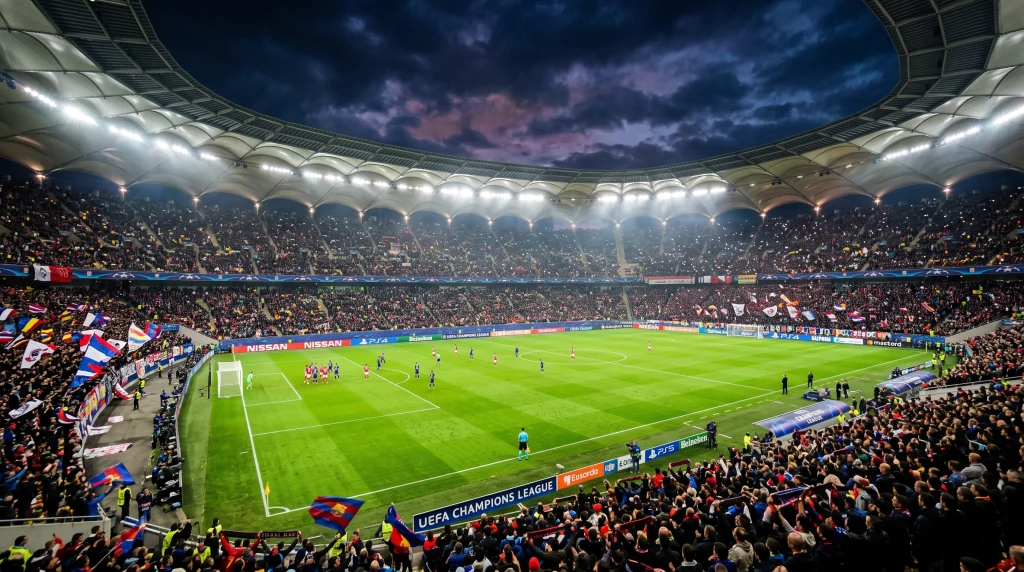
The 2026/27 UEFA Champions League campaign began with qualifying rounds during the summer. The league phase started in September 2026 and continues until January 2027, followed by the knockout stages and the final in June.
| Competition stage | Date or period |
|---|---|
| The league phase begins | September 8, 2026 |
| Matchday 2 | October 13–14, 2026 |
| Matchday 3 | October 20–21, 2026 |
| The league phase ends. | January 27, 2027 |
| Knockout phase play-offs | February 2027 |
| Round of 16 | March 2027 |
| Quarter-finals | April 2027 |
| Semi-finals | April–May 2027 |
| Champions League final | June 5, 2027 |
These dates provide an overview of the season. For confirmed match schedules, kickoff times, and changes, visit the official UEFA Champions League fixtures and results page.
UEFA Champions League Fixtures: October 13–14, 2026
Matchday 2 features several intriguing contests between established European clubs and teams looking to strengthen their positions in the league table.
Unlike the former group-stage system, all clubs compete in one overall league table. Every point earned during the league phase can influence a team’s qualification prospects.
Tuesday, October 13, 2026
The following fixtures are listed for Tuesday’s matchday:
| Match | Fixture |
|---|---|
| 1 | Lens vs Sporting CP |
| 2 | Sabah vs Slavia Prague |
| 3 | Arsenal vs Lille |
| 4 | Atlético Madrid vs Manchester United |
| 5 | Inter vs Club Brugge |
| 6 | Galatasaray vs Barcelona |
| 7 | RB Leipzig vs PSV Eindhoven |
| 8 | Viking vs Bayern Munich |
| 9 | Villarreal vs Napoli |
Wednesday, October 14, 2026
Wednesday’s schedule includes more competitive European matchups, including Manchester City against Paris Saint-Germain and Roma against Real Madrid.
| Match | Fixture |
|---|---|
| 1 | Feyenoord vs Como |
| 2 | LASK vs Liverpool |
| 3 | Roma vs Real Madrid |
| 4 | Aston Villa vs Fenerbahçe |
| 5 | Shakhtar Donetsk vs AEK Athens |
| 6 | Bodø/Glimt vs Borussia Dortmund |
| 7 | Manchester City vs Paris Saint-Germain |
| 8 | Real Betis vs Porto |
| 9 | Slovan Bratislava vs Stuttgart |
Check the official UEFA fixture list before publishing or planning to watch a match. Confirmed kickoff times, venues, and scheduling information should take priority over third-party listings.
Five UEFA Champions League Matches to Watch
Several Matchday 2 fixtures stand out because of the clubs involved and their European ambitions. However, the outcome of each match will depend on current form, team selection, tactical decisions, and performances on the pitch.
Arsenal vs Lille
Arsenal will aim to take advantage of home conditions when they face Lille. A positive result could help the English club strengthen its league-phase position and build momentum for the matches ahead.
Lille, meanwhile, will look to compete effectively and make the most of any opportunities. Arsenal’s ability to control possession and create clear chances could be important, while Lille’s defensive organization may influence how the game develops.
With only eight league-phase matches available to each club, collecting points early can make the later stages of the competition easier to manage.
Atlético Madrid vs Manchester United
Atlético Madrid vs Manchester United is another fixture likely to attract considerable attention. Both clubs have extensive experience in European football and will want to establish themselves as strong competitors.
Atlético Madrid may look to use its home advantage, maintain defensive discipline, and exploit opportunities during transitions. Manchester United will need to respond to the atmosphere and manage the match carefully.
The midfield contest, defensive concentration, and ability to convert scoring chances could all play a part. Previous European achievements provide context, but current performances will be more important in determining the result.
Galatasaray vs Barcelona
Galatasaray’s meeting with Barcelona presents an interesting challenge for both teams. Playing in Istanbul can create a demanding atmosphere for visiting clubs, while Barcelona will look to use its technical ability and attacking movement to create opportunities.
Galatasaray could benefit from disciplined defending, quick transitions, and effective use of its home advantage. Barcelona will need to remain patient and avoid allowing the occasion to disrupt its approach.
The result could influence the early standings, although several league-phase matches will remain after Matchday 2.
Manchester City vs Paris Saint-Germain
Manchester City vs Paris Saint-Germain is one of the headline fixtures scheduled for October 14. Both clubs have invested heavily in their squads and have ambitions of progressing deep into the UEFA Champions League.
The midfield battle could be particularly important, especially if both sides attempt to control possession and create chances through coordinated attacking movements.
Defensive organization will also matter. Against an opponent with strong attacking options, even a small mistake can change the direction of a match.
Supporters should check official team announcements for confirmed starting lineups and injury updates before kickoff.
Roma vs Real Madrid
Roma vs Real Madrid offers another notable contest between two clubs with European pedigree. Roma will look to make its home advantage count, while Real Madrid will aim to produce a performance that strengthens its position in the league phase.
Real Madrid’s history in the competition makes the fixture especially interesting, but past success does not guarantee a positive result. Roma’s tactical approach, the quality of chances created, and individual performances could all influence the outcome.
A win would provide an important boost to the successful team, although the final league standings will depend on results across the entire phase.
How the UEFA Champions League Format Works
The UEFA Champions League now features a 36-team league phase. Instead of splitting the participating clubs into separate groups, UEFA places all 36 teams in a single league table.
Each team plays eight matches against eight different opponents. Clubs play four matches at home and four away, with opponents determined through the competition’s draw system.
This format exposes clubs to a wider variety of opponents and makes every match relevant to the overall standings. Teams must balance the need to collect points with the demands of their domestic leagues and other competitions.
UEFA Champions League Qualification Rules
A club’s final league-phase position determines how it progresses through the tournament.
| League-phase position | Qualification outcome |
|---|---|
| 1st–8th | Qualify directly for the round of 16. |
| 9th–24th | Enter the knockout phase play-offs. |
| 25th–36th | Are eliminated from the competition |
The top eight clubs receive direct entry to the round of 16, avoiding the additional play-off round.
Teams finishing between ninth and 24th must compete in the knockout phase play-offs for the remaining round-of-16 places. Clubs finishing from 25th to 36th are eliminated and do not move into another UEFA competition through this league-phase position.
Points remain crucial throughout the league phase. A victory earns three points, a draw earns one point for each team, and a defeat earns none. If teams finish level on points, UEFA’s official tie-breaking criteria determine their positions.
What Happens After the League Phase?
Once the league phase finishes, the competition moves into the knockout rounds.
The teams qualifying directly for the round of 16 receive a more straightforward route into the next stage. Clubs entering through the play-offs must first win their two-legged ties to progress.
The knockout schedule includes:
- Knockout phase play-offs: Teams finishing 9th to 24th compete for round-of-16 places.
- Round of 16: Sixteen clubs compete in two-legged ties.
- Quarter-finals: Eight remaining teams compete for a place in the semi-finals.
- Semi-finals: Four clubs compete for a place in the final.
- Final: The two remaining clubs meet in a single match to determine the champion.
Knockout ties before the final are generally played over two legs, with each team hosting one match. The club scoring more goals across both legs advances. If the aggregate score is level after the second leg, extra time and, if required, a penalty shoot-out determine the winner. The away-goals rule is no longer used.
The final is a single match at a designated venue. For complete competition rules, consult the official UEFA Champions League regulations for 2026/27.
Which Teams Are Competing in the 2026/27 UEFA Champions League?
The league phase brings together 36 clubs from different European domestic leagues. The competition combines familiar European contenders with teams hoping to establish themselves on the continental stage.
Well-known clubs associated with the competition include Real Madrid, Barcelona, Bayern Munich, Liverpool, Arsenal, Manchester City, Paris Saint-Germain, Inter, and Atlético Madrid. The confirmed list of participants should be checked through UEFA’s official competition information.
A club’s reputation alone is not enough to judge its chances of reaching the final. Several factors can influence its progress.
Factors That Can Influence a Club’s Campaign
League-phase position: Points collected and remaining fixtures help indicate how strong a team’s qualification prospects are.
Recent form: Consistent performances in domestic and European matches can provide a useful indication of a club’s current level.
Home and away results: Some clubs perform particularly well in their own stadiums, while away matches may present additional challenges.
Injuries and suspensions: Missing players can affect tactical plans, squad depth, and the balance of a team.
Fixture congestion: Domestic league matches and other cup competitions may influence player fitness, rotation, and preparation.
Following these factors provides a more balanced view of the tournament than relying on reputation or predictions alone.
For confirmed participants, match information, and official updates, visit the UEFA Champions League website.
What the Opening Matchday Revealed
The opening league-phase matchday took place in September 2026. Several prominent clubs recorded convincing victories, giving their campaigns a positive start.
Reported results included Barcelona’s 5–1 victory against Feyenoord, Paris Saint-Germain’s 6–1 win over Slovan Bratislava, and Bayern Munich’s 5–0 result against Bodø/Glimt.
Other reported results included Aston Villa’s 3–2 victory away to Club Brugge, Manchester City’s 2–0 win against Porto, and Arsenal’s 1–0 away victory over Napoli. Real Madrid also began with a 2–1 win against Inter.
These results offered an early indication of how some teams were performing. However, one matchday is not enough to determine which clubs will qualify directly for the round of 16 or compete for the trophy.
The league phase includes several rounds, giving teams opportunities to recover from setbacks and improve their positions. Clubs that begin strongly must maintain their performance, while teams that drop points early will need to respond in subsequent matches.
For accurate scores and the latest standings, consult the official UEFA fixtures and results page.
When and Where Is the 2027 UEFA Champions League Final?
The 2027 UEFA Champions League final is scheduled for Saturday, June 5, 2027, at the Estadio Metropolitano in Madrid, Spain.
The stadium is the home ground of Atlético Madrid and previously hosted the Champions League final in 2019. Liverpool won that match 2–0 against Tottenham Hotspur.
The 2027 final will bring the European club season to a close, with the two surviving teams competing for the trophy. Before reaching Madrid, both finalists must navigate the league phase and win their knockout ties.
Supporters hoping to attend should follow UEFA’s official announcements for ticket information, stadium access, travel guidance, and event arrangements. Ticket availability and prices can change, so fans should avoid assuming that tickets are available through unofficial sellers.
How to Watch the UEFA Champions League
Broadcast rights for the UEFA Champions League vary by country. The broadcaster showing matches in the United Kingdom may differ from the service available in Pakistan, the United States, or other regions.
To find a legitimate way to watch a particular match, follow these steps:
- Visit the official UEFA Champions League website.
- Find the match you want to watch.
- Check the available broadcast information for your country.
- Confirm the kickoff time in your local time zone.
- Visit the broadcaster’s official website or app to check its schedule.
UEFA’s fixtures and results page is also useful for checking upcoming games and completed scores.
Avoid unverified streaming websites. They may provide unreliable links, display misleading advertisements, or expose visitors to online security risks.
Frequently Asked Questions
What is the UEFA Champions League?
The UEFA Champions League is a major annual European club football competition organized by UEFA. Clubs qualify primarily through their domestic league performances, with entry places determined by UEFA’s competition access rules.
How many teams participate in the Champions League league phase?
The league phase features 36 teams. Each club plays eight matches against eight different opponents, including four home games and four away games.
How many teams qualify directly for the round of 16?
The top eight clubs in the league-phase standings qualify directly for the round of 16. Teams finishing ninth to 24th enter the knockout phase play-offs, while those placed 25th to 36th are eliminated.
When is Matchday 2 of the 2026/27 Champions League?
Matchday 2 is scheduled for October 13 and 14, 2026. Check UEFA’s official fixture list for confirmed kickoff times, venues, and any schedule changes.
When will the 2027 Champions League final take place?
The final is scheduled for June 5, 2027, at the Estadio Metropolitano in Madrid, Spain.
Where can I check UEFA Champions League fixtures and results?
The official UEFA fixtures and results page provides match schedules and completed results. It is the recommended source for checking the latest official information.
How can I watch Champions League matches in Pakistan?
Broadcast availability depends on the rights held by broadcasters in Pakistan. Check UEFA’s official viewing information and the schedules of authorized local broadcasters to find out which service carries the match you want to watch.
Is the new Champions League format different from the old group stage?
Yes. The current format features one league table containing all 36 participating clubs rather than separate groups. Each team plays eight league-phase matches, and its final position determines its route through the competition.
Does the away-goals rule still apply in the Champions League?
No. The away-goals rule is no longer used to decide two-legged knockout ties. If the aggregate score is level after the second leg, the tie proceeds to extra time and, if necessary, a penalty shoot-out.
Following the Road to Madrid
The 2026/27 UEFA Champions League season is moving through its league phase, with many matches still to be played before the knockout rounds take shape. Matchday 2 includes several attractive fixtures, but clubs will need consistent performances across all eight league-phase games to secure the strongest possible qualification position.
For supporters, the most useful approach is to follow confirmed fixtures, match results, league standings, and official team updates. These details provide a clearer picture of each club’s progress than early predictions alone.
The campaign will ultimately conclude in Madrid on June 5, 2027, when the two finalists compete for European club football’s biggest prize.