

Thomas Massie Pushes to Impeach Pete Hegseth Over 8 Charges
Thomas Massie has renewed his effort to impeach Defense Secretary Pete Hegseth, putting the Trump administration under renewed political pressure over U.S. military operations abroad. The Kentucky Republican introduced eight articles of impeachment on November 9, 2026, accusing Hegseth of violating federal laws, exceeding constitutional authority, and conducting military operations without proper congressional authorization.
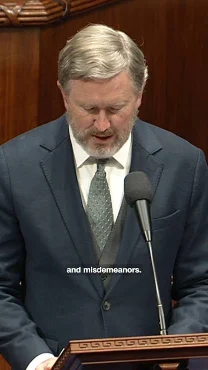
The resolution has intensified debate in Washington over executive power, military accountability, and Congress’s constitutional responsibility. The House is expected to consider the measure within two legislative days, although Republican lawmakers could attempt to block it through a procedural vote.
Why Is Thomas Massie Trying to Impeach Pete Hegseth?
Thomas Massie argues that Hegseth should be held accountable for decisions involving military operations in Iran, Venezuela, Yemen, and other regions.
The resolution contains eight separate articles alleging violations of federal law and constitutional restrictions. It also raises concerns about civilian casualties, military strikes against suspected drug-trafficking vessels, and the Pentagon’s treatment of Senator Mark Kelly.
According to Massie, the allegations go beyond political disagreements about military policy. He argues that the defense secretary’s actions demonstrate a failure to respect congressional authority and legal protections governing the use of military force.
Eight Articles of Impeachment Against Pete Hegseth
The resolution divides the allegations into eight articles. Three focus on the Iran war, while the remaining five address civilian protection, military strikes, alleged retaliation, Venezuela, and Yemen.
1. Military Operations Against Iran
Three articles accuse Hegseth of conducting military operations against Iran without congressional authorization.
The resolution argues that the administration continued military action despite congressional objections and restrictions under the War Powers Resolution of 1973.
The law generally requires the president to end unauthorized military involvement within 60 days unless Congress approves the operation, subject to certain provisions. Massie argues that the administration exceeded these limits.
2. Alleged Failure to Protect Civilians
Another article concerns civilian casualties during military operations in Iran.
The resolution references a February 28 strike on an elementary school in Minab that reportedly killed more than 200 people, including children.
Massie alleges that changes to Defense Department procedures weakened protections intended to prevent civilian casualties. These allegations remain part of the impeachment resolution and have not been established through an impeachment trial.
3. Strikes Against Suspected Drug Boats
The resolution also challenges U.S. military strikes against suspected drug-trafficking vessels in the Caribbean Sea and eastern Pacific Ocean.
Massie alleges that these operations resulted in unlawful killings, including attacks involving survivors of earlier strikes.
The allegations raise questions about the legal authority to use military force against suspected criminal targets outside traditional battlefields.
4. The Mark Kelly Controversy
Another article concerns Arizona Senator Mark Kelly.
Kelly participated in a video with other lawmakers reminding American service members that they are not required to follow unlawful military orders.
The Pentagon subsequently took disciplinary action against Kelly, including issuing a letter of censure. Massie argues that the response represented retaliation against protected political speech.
5. Capture of Nicolás Maduro
The resolution questions the legality of the U.S. military operation that captured former Venezuelan president Nicolás Maduro.
Massie argues that the operation involved military action without the necessary congressional authorization, raising concerns about presidential authority.
6. Military Operations in Yemen
The final article addresses U.S. military operations in Yemen against Houthi forces.
Massie alleges that Hegseth directed military operations that caused substantial civilian casualties without obtaining proper congressional authorization.
Together, these eight articles form the foundation of the impeachment effort against the defense secretary.
Pete Hegseth Responds to the Impeachment Allegations
Hegseth has rejected the allegations and described the impeachment effort as political theatre rather than a genuine attempt at government oversight.
He has defended the administration’s military operations, arguing that they were necessary for national security. His response directly contrasts with Thomas Massie’s position that the defense secretary violated legal and constitutional restrictions.
The allegations have not yet been tested in an impeachment trial, and Hegseth maintains that his actions were lawful.
Donald Trump Defends Pete Hegseth
President Donald Trump has publicly supported Hegseth and criticized the impeachment effort.
Trump has defended the defense secretary’s leadership and rejected attempts to remove him from office. House Speaker Mike Johnson has also expressed opposition to impeachment, pointing to potential political and international consequences.
Meanwhile, House Democratic Leader Hakeem Jeffries has indicated support for impeaching Hegseth.
The political disagreement places Thomas Massie in an unusual position: a Republican challenging a defense secretary serving under a Republican president.
Could the House Impeach Pete Hegseth?
The next major development is the House’s consideration of the privileged resolution.
Under House procedures, lawmakers must address the measure within two legislative days. They could vote directly on impeachment, refer it to committee, or approve a procedural motion to table it.
If the House approves impeachment, Hegseth would not automatically lose his position. The Senate would need to conduct an impeachment trial, and conviction would require a two-thirds majority of senators present.
Why the Thomas Massie Impeachment Effort Matters
The impeachment effort has brought renewed attention to the constitutional balance between Congress and the White House.
Congress has the authority to declare war, while the president serves as commander in chief. The War Powers Resolution also establishes procedures governing the deployment and continued use of American military forces.
For Thomas Massie, the central issue is whether the executive branch can continue major military operations without sufficient congressional approval.
The House proceedings could therefore have consequences beyond Hegseth’s political future. They may also influence future debates about military oversight, civilian protection, and presidential authority.
As lawmakers prepare to consider the resolution, the political dispute surrounding Thomas Massie and Pete Hegseth is becoming an important test of congressional oversight and executive power.