

SpaceX Stock: Price AI Growth, Risks, & How to Buy Shares
SpaceX stock is attracting investor attention after the company’s latest quarterly results showed strong revenue growth across its artificial intelligence and satellite connectivity businesses. The company’s third-quarter 2026 report, released on October 20, highlighted rising demand for AI computing infrastructure and continued growth in its Starlink internet business. However, its rapidly increasing spending also creates financial risks that investors should understand.
Latest news
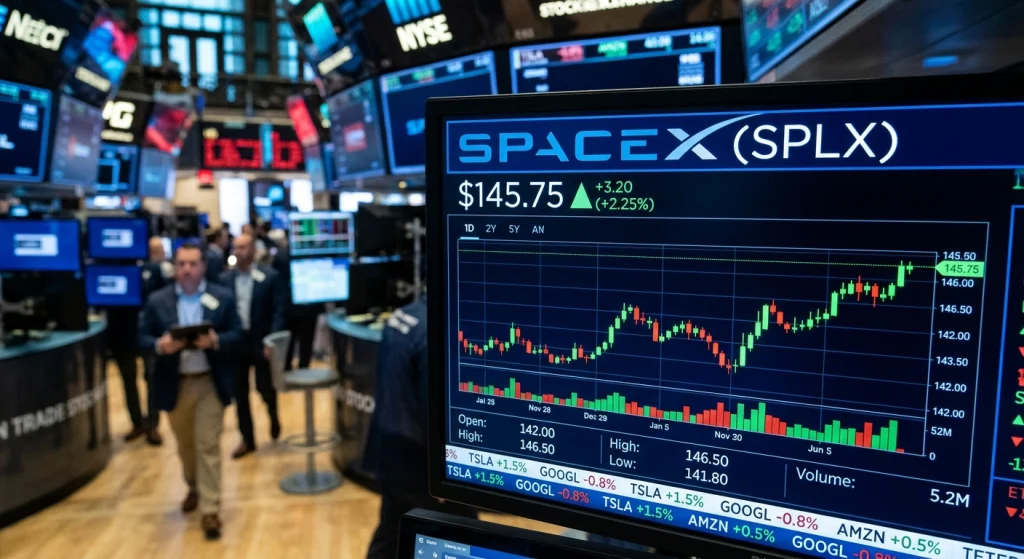
For anyone researching the SpaceX stock price, the main questions are straightforward: How much is one share worth? What is driving the company’s growth? Is the business financially strong enough to justify its valuation? And how can investors purchase shares?
This guide examines SpaceX’s latest reported financial results, its stock-market information, potential growth opportunities, investment risks, and the practical steps involved in buying shares. It uses reported company information rather than treating historical prices as live market quotes.
SpaceX Stock: Latest Company and Market Update
SpaceX trades publicly under the ticker symbol SPCX. According to the company’s official IPO announcement, its shares began trading on the Nasdaq Global Select Market and Nasdaq Texas on June 12, 2026, following an initial public offering priced at $135 per share. Source: SpaceX’s official IPO announcement.
The company’s October 20 earnings announcement became an important event for investors because it revealed how quickly its business was expanding. SpaceX reported $14.575 billion in third-quarter revenue and $4.4 billion in net income for the quarter ended September 30, 2026. Revenue increased approximately 161% compared with the same quarter of the previous year. Source: SpaceX’s Q3 2026 results filed with the SEC.
These figures show substantial growth, but they do not automatically mean the stock is cheap. Investors must also consider the share price, the company’s valuation, future investment requirements, competition, and the possibility that expectations have already been reflected in the market price.
SpaceX Stock Price: What Is the Latest Verified Price?
The SpaceX stock price changes during market trading as buyers and sellers respond to company announcements, financial results, economic conditions, and expectations about future growth.
The verified historical closing price for October 20, 2026, was $147.79 per share. This is a historical closing figure, not a live quote for October 21 or any later date.
For an updated quote, investors can check the SPCX quote on Yahoo Finance or consult their broker’s trading platform. Confirm the date, market session, and whether a displayed figure is a regular-session close, an intraday quote, or an extended-hours price.
SpaceX Stock Price Chart: What Should Investors Check?
A SpaceX stock price chart can help investors understand how the share price has moved over different periods. However, a chart is more useful when it is considered alongside trading volume, company announcements, and financial performance.
When reviewing a chart, pay attention to:
- Daily price movement: Shows how the stock has performed during recent trading sessions.
- Weekly and monthly trends: Help put short-term price changes into a broader context.
- Trading volume: Can indicate how much investor activity accompanied a price movement.
- Earnings dates: Help explain why the stock may rise or fall sharply.
- Historical highs and lows: Provide context but do not predict future prices.
A rising chart does not guarantee further gains. Similarly, a short-term decline does not necessarily mean the company’s long-term business outlook has deteriorated.
What Did SpaceX Stock Close At Today?
The answer depends on the date and market session. For October 20, 2026, the verified closing price was $147.79. If you are checking the stock on October 21, the October 20 close is the previous session’s closing price, not necessarily the current price.
For an accurate answer to this question on a later date, check the latest completed trading session through a reliable market-data service. Do not use an old article or screenshot as evidence of the current SpaceX stock price live.
SpaceX Q3 2026 Earnings: Revenue and Profit
SpaceX’s third-quarter results provide important information about the company’s growth and its ability to generate earnings while expanding its operations.
The company reported the following figures for the quarter ended September 30, 2026:
| Financial metric | Q3 2026 result |
|---|---|
| Total revenue | $14.575 billion |
| Revenue growth year over year | Approximately 161% |
| Net income | $4.4 billion |
| Income from operations | $2.791 billion |
| Adjusted EBITDA | $8.809 billion |
| Total capital expenditures | $19.593 billion |
Revenue increased from approximately $5.576 billion in the third quarter of 2025 to $14.575 billion in the third quarter of 2026. Net income also improved substantially compared with the loss reported for the prior-year quarter.
These results suggest that SpaceX is building a much larger business across several technology areas. However, investors should look beyond the headline growth rate and examine which divisions generated the revenue, how much they spent to produce it, and whether that performance can continue.
What Is Driving SpaceX Stock Growth?
SpaceX operates across space transportation, satellite connectivity, and AI-related infrastructure. Its recent results show that these businesses contribute differently to its overall financial performance.
1. Artificial Intelligence and Computing Infrastructure
SpaceX’s Super Intelligence segment generated approximately $7.56 billion in third-quarter revenue, making it the company’s largest reported revenue segment for the quarter. The company attributed its expansion partly to cloud-services agreements, AI software and applications, and its acquisition of Cursor.
Demand for computing capacity could create further opportunities if businesses continue to invest in AI infrastructure. Nevertheless, revenue growth alone does not establish whether those investments will produce attractive long-term returns.
Investors should monitor operating income, capital expenditure, customer demand, and the cost of building and operating computing facilities.
2. Starlink and Connectivity Revenue
The Connectivity segment, which includes Starlink, generated approximately $5.248 billion in third-quarter revenue. SpaceX reported 69% year-over-year revenue growth in this segment and continued growth in consumer and enterprise adoption.
Starlink’s satellite internet service provides recurring revenue opportunities through subscriptions and connectivity services. Its reach can be valuable in locations where conventional broadband infrastructure is limited or difficult to deploy.
Potential challenges include satellite deployment costs, competition, service capacity, regulatory requirements, and the expense of expanding into additional markets.
3. Rockets, Launches, and Space Infrastructure
SpaceX’s Space segment generated approximately $1.767 billion in third-quarter revenue. This business includes launch services and other space-related activities.
Rocket launches and spacecraft development remain important to SpaceX’s broader strategy. The company is also working to expand its Starship capabilities and satellite infrastructure.
However, this segment reported an operating loss of approximately $7 million in Q3 2026. This illustrates why investors should assess individual business segments instead of assuming every part of a fast-growing company is equally profitable.
The Biggest Risk: SpaceX Is Spending Heavily on Growth
One of the most important details in SpaceX’s latest report is its capital expenditure.
The company reported approximately $19.593 billion in capital expenditures during Q3 2026, including about $16.444 billion attributed to the Super Intelligence segment. The company also indicated that fourth-quarter capital expenditure could reach $35 billion to $40 billion. Sources: SEC filing and earnings-call transcript.
Capital expenditure is money spent on long-term assets and infrastructure, such as computing facilities, equipment, satellites, and other facilities. Such spending may support future growth, but it can also put pressure on cash flow and increase execution risk.
The key question is not simply whether SpaceX can grow revenue. It is whether the revenue and profits generated over time will justify the substantial cost of building its infrastructure.
Investors should monitor whether new facilities attract enough customers, whether operating margins remain healthy, and whether the company’s investment plans change.
Where the Growth Is Coming From
SpaceX is now three businesses in one, and they are very different in size.
Super Intelligence is the biggest. The AI infrastructure segment earned about $7.6 billion in Q3, more than either of the others. Management credits cloud-services contracts, AI software and the Cursor acquisition. Compute capacity reached 1.7 gigawatts, with more coming. The open question is whether that capacity stays busy and profitable.
Starlink is the steady engine. Connectivity brought in about $5.2 billion, up roughly 69% year over year. The service added 1.6 million consumer subscribers in the quarter and now has 13.6 million. Subscriptions create recurring revenue, and the service fills gaps where traditional broadband is scarce. Satellite costs, competition and regulation are the main pressures.
Launch is the foundation. The Space segment generated about $1.8 billion. Launches and Starship remain central to SpaceX’s long-term plans, but this segment is much smaller than the other two. When you judge the company, look at each segment’s profit, not just the combined total.
The Real Test: Spending
The most important number in the report may not be revenue. SpaceX spent about $19.6 billion on capital expenditure in Q3, most of it on AI infrastructure. Management indicated Q4 spending could reach $35 billion to $40 billion.
Capital expenditure means money spent on long-term assets such as data centers, equipment and satellites. It can build future earnings, but it also drains cash and raises the stakes on every bet. The question isn’t whether SpaceX can grow. It is whether what it builds will earn back what it costs.
One more item to watch: reports after the earnings call said SpaceX and Tesla had formed special committees to evaluate a possible merger. Nothing is decided, and any deal would need shareholder approval, but it is the kind of news that can move the stock either way.
How to Buy SpaceX Stock
SpaceX is publicly traded, so you can generally buy it through a broker that offers US-listed shares.
- Choose a regulated broker that accepts customers from your country and offers US stocks.
- Search for SPCX and confirm the company name and exchange before ordering.
- Check the costs: commissions, currency-conversion fees and account minimums.
- Complete verification. Expect to provide ID, address details and tax forms.
- Do your homework. Read the latest filings and think about valuation and risk.
- Pick an order type. A market order buys at the current price, while a limit order sets the most you will pay.
- Follow official sources, not social-media predictions.
What you can buy depends on your country and your broker. Investors in Pakistan should confirm that a provider legally accepts Pakistani residents and allows this US-listed stock before sending any money.
Can You Still Buy Before the IPO?
No, and that question is out of date. SpaceX has traded publicly since June 12, so you can buy shares on the open market like any other listed stock. Be wary of anyone selling “private” or “pre-IPO” SpaceX shares, especially if they promise guaranteed access or ask for payment outside normal channels. Tokenized products that mention SpaceX are also not the same as owning shares.
Is SpaceX Stock a Good Investment?
That depends on your goals, your tolerance for risk and how you view the valuation.
The case for it: fast revenue growth, a return to profit, a growing Starlink subscriber base, strong demand for AI infrastructure and a large order backlog.
The case against it: very heavy spending, uncertain returns on AI investment, competition, regulatory exposure, a possible Tesla merger and a price that may already assume a lot of success.
Compare the market value with revenue, profit and cash flow, and decide how much you could afford to lose. Never invest money you need for essentials.
Frequently Asked Questions
What is the SpaceX stock symbol?
SPCX, listed on the Nasdaq Global Select Market and Nasdaq Texas.
How much is SpaceX stock?
It closed at $147.79 on October 20, 2026. The live price changes throughout the trading day, so check a market-data service.
When did SpaceX go public?
On June 12, 2026, at an IPO price of $135 per share.
Where can I see the live price?
On Yahoo Finance or in your broker’s app. Check the timestamp, because delayed and after-hours quotes can differ.
Does strong revenue growth mean the stock will rise?
Not necessarily. The price also depends on valuation, profit, cash flow, expectations and market conditions.
The Bottom Line
SpaceX’s Q3 shows a company growing fast in Starlink and AI, turning a profit and spending heavily to keep expanding. The opportunity is real, and so is the risk that the spending doesn’t pay off. Before you decide, use the correct ticker, check the live price, read the company’s filings and weigh both sides.
How to Buy SpaceX Stock
Where the Growth Is Coming From
SpaceX is now three businesses in one, and they are very different in size.
Super Intelligence is the biggest. The AI infrastructure segment earned about $7.6 billion in Q3, more than either of the others. Management credits cloud-services contracts, AI software and the Cursor acquisition. Compute capacity reached 1.7 gigawatts, with more coming. The open question is whether that capacity stays busy and profitable.
Starlink is the steady engine. Connectivity brought in about $5.2 billion, up roughly 69% year over year. The service added 1.6 million consumer subscribers in the quarter and now has 13.6 million. Subscriptions create recurring revenue, and the service fills gaps where traditional broadband is scarce. Satellite costs, competition and regulation are the main pressures.
Launch is the foundation. The Space segment generated about $1.8 billion. Launches and Starship remain central to SpaceX’s long-term plans, but this segment is much smaller than the other two. When you judge the company, look at each segment’s profit, not just the combined total.
The Real Test: Spending
The most important number in the report may not be revenue. SpaceX spent about $19.6 billion on capital expenditure in Q3, most of it on AI infrastructure. Management indicated Q4 spending could reach $35 billion to $40 billion.
Capital expenditure means money spent on long-term assets such as data centers, equipment and satellites. It can build future earnings, but it also drains cash and raises the stakes on every bet. The question isn’t whether SpaceX can grow. It is whether what it builds will earn back what it costs.
One more item to watch: reports after the earnings call said SpaceX and Tesla had formed special committees to evaluate a possible merger. Nothing is decided, and any deal would need shareholder approval, but it is the kind of news that can move the stock either way.
How to Buy SpaceX Stock
SpaceX is publicly traded, so you can generally buy it through a broker that offers US-listed shares.
- Choose a regulated broker that accepts customers from your country and offers US stocks.
- Search for SPCX and confirm the company name and exchange before ordering.
- Check the costs: commissions, currency-conversion fees and account minimums.
- Complete verification. Expect to provide ID, address details and tax forms.
- Do your homework. Read the latest filings and think about valuation and risk.
- Pick an order type. A market order buys at the current price, while a limit order sets the most you will pay.
- Follow official sources, not social-media predictions.
What you can buy depends on your country and your broker. Investors in Pakistan should confirm that a provider legally accepts Pakistani residents and allows this US-listed stock before sending any money.
Can You Still Buy Before the IPO?
No, and that question is out of date. SpaceX has traded publicly since June 12, so you can buy shares on the open market like any other listed stock. Be wary of anyone selling “private” or “pre-IPO” SpaceX shares, especially if they promise guaranteed access or ask for payment outside normal channels. Tokenized products that mention SpaceX are also not the same as owning shares.
Is SpaceX Stock a Good Investment?
That depends on your goals, your tolerance for risk and how you view the valuation.
The case for it: fast revenue growth, a return to profit, a growing Starlink subscriber base, strong demand for AI infrastructure and a large order backlog.
The case against it: very heavy spending, uncertain returns on AI investment, competition, regulatory exposure, a possible Tesla merger and a price that may already assume a lot of success.
Compare the market value with revenue, profit and cash flow, and decide how much you could afford to lose. Never invest money you need for essentials.
What is the SpaceX stock symbol?
SPCX, listed on the Nasdaq Global Select Market and Nasdaq Texas.
How much is SpaceX stock?
It closed at $147.79 on October 20, 2026. The live price changes throughout the trading day, so check a market-data service.
When did SpaceX go public?
On June 12, 2026, at an IPO price of $135 per share.
Where can I see the live price?
On Yahoo Finance or in your broker’s app. Check the timestamp, because delayed and after-hours quotes can differ.
Does strong revenue growth mean the stock will rise?
Not necessarily. The price also depends on valuation, profit, cash flow, expectations and market conditions.
The Bottom Line
SpaceX’s Q3 shows a company growing fast in Starlink and AI, turning a profit and spending heavily to keep expanding. The opportunity is real, and so is the risk that the spending doesn’t pay off. Before you decide, use the correct ticker, check the live price, read the company’s filings and weigh both sides.
Because SpaceX is publicly traded, eligible investors can generally purchase its shares through a brokerage that offers access to the relevant US market and supports SPCX trading.
The process usually involves the following steps:
How to Buy SpaceX Stock Before IPO
The phrase “how to buy SpaceX stock before IPO” was relevant before the company’s public listing. SpaceX began public trading on June 12, 2026, so investors no longer need to seek pre-IPO access simply to purchase publicly listed shares.
Pre-IPO investments generally involve private transactions, eligibility restrictions, limited liquidity, and additional risks. Be cautious of anyone claiming to offer guaranteed access to private SpaceX shares or asking for payment through unofficial channels.
For current public-market investing, check the SPCX listing and your broker’s eligibility rules.
What Is the SpaceX Stock Symbol?
The SpaceX stock symbol is SPCX. The company’s official IPO announcement states that its shares began trading on Nasdaq Global Select Market and Nasdaq Texas under this ticker on June 12, 2026.
When searching for the stock, verify the company name and listing details. Ticker symbols can sometimes be reused across different securities or data providers, so an old price record should not automatically be assumed to refer to the current SpaceX listing.
Is SpaceX Stock a Good Investment?
Whether SpaceX stock is suitable depends on the investor’s objectives, risk tolerance, time horizon, and assessment of the company’s valuation.
There are several potential positives: rapid revenue growth, strong demand for satellite connectivity, expansion in AI infrastructure, and opportunities in launch services and space technology.
There are also significant risks. The company is investing heavily in infrastructure, and its future returns depend on execution, customer demand, operating costs, competition, and the commercial success of new initiatives. A strong earnings report does not guarantee that the stock will rise, particularly if investors already expect exceptional results.
Before investing, compare the company’s market valuation with its revenue, earnings, cash flow, and future investment needs. Consider how much you could afford to lose and avoid investing money needed for essential expenses.
Frequently Asked Questions
How much is SpaceX stock?
The verified closing price on October 20, 2026, was $147.79 per share. The price changes during trading, so check a current market-data service for the latest quote.
What is the SpaceX stock symbol?
SpaceX trades under the ticker symbol SPCX on Nasdaq Global Select Market and Nasdaq Texas.
Is SpaceX stock publicly traded?
Yes. SpaceX began public trading on June 12, 2026, following its IPO.
Where can I check the SpaceX stock price live?
You can check the SPCX quote on Yahoo Finance or your brokerage platform. Check the timestamp and market session because delayed quotes and after-hours prices may differ from the regular-session price.
What did SpaceX stock close at today?
For October 20, 2026, the verified closing price was $147.79. For any other date, consult the latest completed session’s historical data.
How can I buy SpaceX stock?
You generally need a brokerage account that offers SPCX and accepts investors from your country. Review eligibility, fees, currency conversion, and the risks before placing an order.
Can I still buy SpaceX stock before its IPO?
SpaceX has already gone public, so buying its publicly traded shares is different from obtaining private pre-IPO shares. Be cautious of unofficial offers claiming guaranteed private access.
Does SpaceX’s revenue growth mean its stock will rise?
No. Revenue growth can support a company’s outlook, but the share price also reflects valuation, profitability, cash flow, expectations, market conditions, and risk. Even a company reporting strong earnings can experience a stock-price decline.
Final Verdict
SpaceX’s Q3 2026 results show strong revenue growth across its AI and connectivity businesses, alongside a substantial increase in capital spending. The company has meaningful opportunities in satellite internet, computing infrastructure, and space transportation, but its future performance will depend on whether these investments deliver sustainable returns.
Anyone researching SpaceX stock should use the correct ticker, verify the latest price, read the company’s financial reports, and weigh both growth opportunities and risks. Avoid relying on a historical closing price as a live quote or treating recent earnings growth as a guarantee of future returns.
Financial disclaimer: This article is for informational and educational purposes only. It is not financial, investment, tax, or legal advice. Stock prices can change, and investors may lose some or all of their invested capital. Conduct independent research and consult a qualified financial professional if needed.