

Shroud of Turin: History, Evidence and the Mystery of Jesus’ Burial Cloth
The Shroud of Turin is one of the most fascinating and debated religious artefacts in history. This ancient linen cloth carries a faint image of a man whose body appears to show injuries associated with crucifixion. For centuries, many Christians have believed that it was used to wrap the body of Jesus Christ after his crucifixion. However, scientists and historians continue to investigate its origins, age, and unusual image.
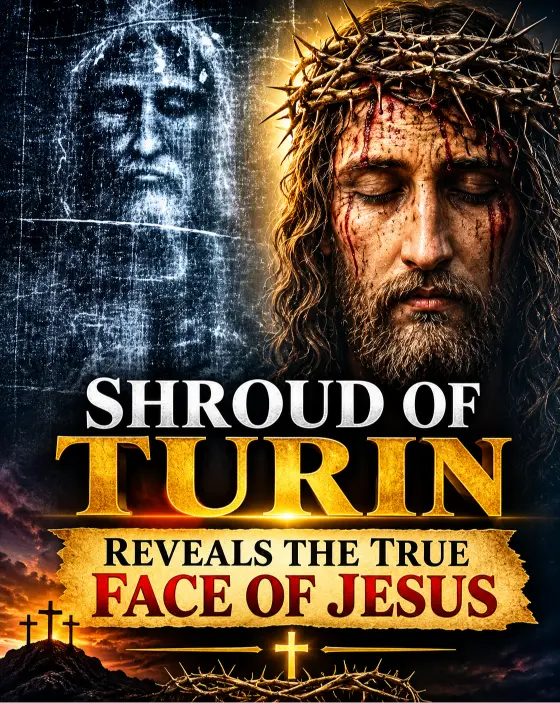
The mystery surrounding the Shroud of Turin raises several important questions. Is it really the burial cloth of Jesus? What did scientific testing reveal about its age? How was the image created, and what evidence supports its authenticity? Although religious beliefs and scientific investigations offer different perspectives, the cloth remains an important subject of historical and scientific research.
What Is the Shroud of Turin?
The Shroud of Turin is a rectangular linen cloth measuring approximately 4.3 meters long and 1.08 meters wide. It contains faint images of the front and back of a human figure. The figure appears to have long hair, a beard, and several marks that some observers associate with injuries described in Christian accounts of the crucifixion.
The cloth is called the Shroud of Turin because it is preserved in Turin, Italy. It is particularly important to many Christians who believe it may have been used to cover Jesus Christ after his death.
One unusual feature is the image itself. It appears on the linen without the appearance of an ordinary painted portrait. Researchers have examined its physical and chemical characteristics to understand how it formed.
However, the exact process responsible for the image has not been conclusively established. This uncertainty is one reason the Shroud of Turin continues to attract scientific, historical, and religious attention.
History and Origins of the Shroud of Turin
The early history of the Shroud of Turin is not fully documented. There are different theories about where it originated and how it reached Europe. However, historical evidence places the cloth in France during the fourteenth century.
One of the earliest well-documented appearances occurred around 1355, when the cloth was displayed in a church in Lirey, France. Its appearance attracted attention from religious communities and visitors, but it also created controversy about whether it was an authentic religious relic.
During the following centuries, the Shroud passed through different periods of preservation and public display.
In 1532, a fire damaged the cloth while it was kept in Chambéry, France. The damage left several burn marks and areas requiring repair. In 1534, Poor Clare nuns repaired damaged sections by attaching patches and supporting the original linen with another cloth.
The Shroud was later transferred to Turin, Italy, where it became closely associated with the city’s religious heritage.
Its documented history is important because it provides researchers with historical evidence about its preservation. Nevertheless, the historical record does not establish that the cloth dates back to the first century.
Why Is the Shroud of Turin Associated With Jesus Christ?
The connection between the Shroud of Turin and Jesus Christ comes mainly from its human image and the injuries visible on the cloth.
According to the Christian Gospels, Jesus was crucified, died, and was placed in a burial cloth before being laid in a tomb. Some Christians believe the image on the Shroud resembles the physical suffering described in these accounts.
The visible marks have been interpreted as possible evidence of injuries associated with crucifixion. These include marks around the head, arms, legs, and body.
For believers, these similarities make the Shroud an important object of religious devotion.
However, the historical connection remains unproven. There is no universally accepted evidence establishing that the individual represented on the cloth was Jesus Christ.
It is therefore important to distinguish between religious interpretation and scientifically established findings.
What Did the 1988 Carbon Dating Test Reveal?
One of the most important scientific investigations into the Shroud of Turin took place in 1988. Researchers used radiocarbon dating to estimate the age of the linen.
Three laboratories participated in the investigation:
- University of Oxford in England
- University of Arizona in the United States
- Swiss Federal Institute of Technology in Zurich, Switzerland
The researchers used accelerator mass spectrometry, a scientific method that measures carbon-14 in materials containing carbon.
The findings were published in the scientific journal Nature in February 1989.
The study concluded that the tested linen dated between 1260 and 1390 CE, with a 95% confidence level. This result suggested that the cloth originated during the medieval period rather than the lifetime of Jesus Christ.
The findings became one of the strongest scientific arguments against the Shroud being an authentic first-century burial cloth.
However, questions about the sampling procedure and statistical interpretation continued to generate discussion among researchers.
Why Do Scientists Still Debate the Shroud of Turin?
Although the 1988 carbon dating study produced a medieval date, some researchers have questioned whether the tested material was sufficiently representative of the entire cloth.
One concern involves the location from which the samples were collected. Critics have suggested that the tested area might have been affected by repairs, contamination, or other factors.
In 2019, researchers published a statistical analysis of previously released raw radiocarbon measurements. Their work identified differences among the laboratory datasets and argued that the results should be reconsidered.
However, statistical questions about the measurements do not independently establish an earlier date for the cloth.
A further scientific contribution appeared in 2026.
A study published in npj Heritage Science on April 18, 2026, examined two textile fragments retained from the 1988 Arizona radiocarbon samples. Researchers Rachel Freer-Waters and A. J. Timothy Jull compared these fragments with control textiles.
Their findings indicated that the analyzed fragments were consistent with the main Shroud textile and showed no evidence of contamination. The researchers also reviewed the history of the original dating controversy.
This study is important because it provides additional information about the material used in the 1988 investigation. It does not, however, independently redetermine the age of the entire Shroud.
The debate therefore continues, but the original radiocarbon result remains an important scientific finding.
How Was the Image on the Shroud of Turin Created?
Another major mystery concerns how the human image appeared on the linen.
Unlike an ordinary photograph, the image does not have a clearly established creation process. Researchers have examined its appearance, surface characteristics, and chemical properties to understand its formation.
Several explanations have been proposed over the years.
Some researchers have investigated whether chemical reactions, natural aging, pigments, or other physical processes could explain the image. Others have suggested that particular physical or energy-related processes might have contributed to its formation.
However, no explanation has achieved universal scientific acceptance.
The image also has unusual visual characteristics that have attracted attention from photographers and researchers. When examined as a photographic negative, certain details become more visible, making the face and body easier to study.
Despite these observations, the negative-like appearance does not prove that the cloth is an ancient photograph or a miraculous image.
Understanding the image remains a separate scientific question from determining the age of the linen.
Where Is the Shroud of Turin Today?
The Shroud of Turin is preserved in the Cathedral of Saint John the Baptist in Turin, Italy.
It is kept under controlled conservation conditions because of its historical, cultural, and religious importance. Public exhibitions are arranged on special occasions rather than allowing unrestricted access.
People interested in seeing the Shroud should check official announcements from the custodians and religious authorities in Turin before planning a visit.
Its preservation is particularly important because the linen has survived centuries of handling, historical damage, and repairs.
Today, the Shroud remains an important religious relic and an object of continuing historical and scientific interest.
Is the Shroud of Turin Real or Fake?
The authenticity of the Shroud of Turin remains disputed.
People who believe it is authentic often point to the unusual human image, the apparent injuries, and the possibility that the image formation process is not fully understood.
On the other hand, the 1988 radiocarbon dating results support a medieval origin. Historical documentation also places the Shroud in France during the fourteenth century.
Scientific investigations have produced useful information, but they have not established that the cloth belonged to Jesus Christ.
The most responsible conclusion is that the Shroud is a genuine historical linen artifact with an unusual image, while its exact origin and connection to Jesus remain unproven.
For Christians, its religious meaning may remain significant regardless of the scientific debate. For historians and scientists, it continues to offer questions about medieval history, textile preservation, and the investigation of historical objects.
Frequently Asked Questions About the Shroud of Turin
Is the Shroud of Turin really Jesus’ burial cloth?
Some Christians believe it is the burial cloth of Jesus Christ. However, there is no conclusive scientific or historical evidence proving that connection.
How old is the Shroud of Turin?
The 1988 radiocarbon dating study estimated that the tested linen dated between 1260 and 1390 CE. Researchers have continued discussing the sampling and interpretation of those results.
What does the Shroud of Turin show?
The cloth contains faint front and back images of a human figure. The visible marks have been interpreted by some people as resembling injuries associated with crucifixion.
Where can you find the Shroud of Turin?
The Shroud is preserved in the Cathedral of Saint John the Baptist in Turin, Italy. Public viewing depends on officially arranged exhibitions.
What happened to the Shroud of Turin in 1532?
A fire damaged the Shroud in 1532 while it was kept in Chambéry, France. Poor Clare nuns later repaired the damaged sections with patches and additional supporting fabric.
What did the 2026 Shroud of Turin research discover?
A study published in npj Heritage Science in April 2026 examined textile fragments from the 1988 Arizona radiocarbon samples. It found that the fragments were consistent with the main cloth and showed no evidence of contamination.
Has science proved that the Shroud of Turin is fake?
Science has not conclusively established that the Shroud is fake. However, the 1988 radiocarbon dating study provided evidence supporting a medieval origin rather than a first-century origin.
Final Thoughts
The Shroud of Turin remains one of history’s most intriguing religious artifacts. Its unusual image, centuries of preservation, and connection to Christian beliefs have made it a subject of continuing interest.
Scientific research, particularly the 1988 radiocarbon dating investigation and subsequent studies, has provided important evidence about the cloth. Nevertheless, questions about its image, historical origins, and religious significance continue to attract attention.
Whether viewed as a sacred Christian relic or a fascinating historical textile, the Shroud of Turin represents an ongoing intersection of faith, history, and science. Its authenticity has not been established, but the questions surrounding it continue to encourage further research.