
Mitt Romney Now: Net Worth, Career & Latest News (2026)
Mitt Romney remains a recognisable figure in American politics, business, and public service, even after leaving the U.S. Senate in January 2025. The former Republican presidential nominee built a career spanning private equity, the 2002 Winter Olympics, the governorship of Massachusetts, and six years representing Utah in the Senate.
In 2026, Mitt Romney has continued to participate in public discussions about American democracy, leadership, economic policy, and the responsibilities of government. He appeared at Harvard University in April and returned to the public stage in September for a lecture at Duke University’s Sanford School of Public Policy. These appearances show that he remains involved in national conversations without holding an elected office. Harvard Gazette and Duke University have published reports about his recent comments.
But Romney’s story goes well beyond his latest appearances. His biography includes a successful business career, a major role in organising the Salt Lake City Winter Olympics, a controversial presidential campaign, a landmark state healthcare law, and high-profile disagreements within his own political party.
This guide explores Mitt Romney’s latest verified public activities in 2026, early life, education, family, business background, political career, financial profile, and life after the Senate.
Follow for more updates on the World Series 2026
Mitt Romney’s Latest News in 2026
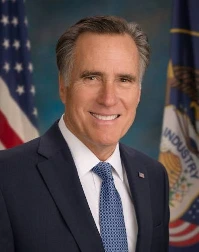
The latest verified updates reviewed for this article focus on Romney’s university appearances and public comments about American leadership. He has discussed political division, responsible government, international relations, and the importance of public service.
September 2026: Mitt Romney Speaks at Duke University
On September 23, 2026, Romney participated in Duke University’s Sanford Distinguished Lecture, titled America at 250: The Future of American Democracy. The discussion was part of the university’s programme marking the 250th anniversary of the United States.
Before the public event, Romney met with students and discussed his transition from business into public service. He reflected on his leadership of the 2002 Winter Olympics and explained that his decision to enter politics was motivated by a desire to accomplish meaningful goals.
During the lecture, Romney discussed American democracy, political polarization, international competition, economic policy, and the growing influence of artificial intelligence. He also spoke about the responsibilities of political leaders and the importance of making decisions according to personal principles.
His remarks offered insight into how he views public service after leaving elected office. The event did not announce a new political campaign or government appointment. Read the Duke University report.
April 2026: Romney Discusses American Democracy at Harvard
On April 13, 2026, Romney took part in a Harvard University discussion with historian Jill Lepore about the state of American democracy.
The conversation covered political polarization, economic inequality, foreign policy, the role of Congress, and declining public confidence in political institutions. Romney argued that political leaders should focus on governing rather than treating politics primarily as a performance.
He also discussed America’s relationships with traditional allies and the challenges of competing with China. His comments reflected his longstanding interest in foreign policy and bipartisan cooperation, although his views on particular policies have sometimes differed from those of other Republican leaders.
The discussion demonstrated that Romney continues to contribute to public debate about national issues after his Senate retirement. Read the Harvard Gazette report.
April 2026: Romney Returns to Massachusetts for a Healthcare Anniversary
Romney also returned to Massachusetts in April for an event marking the 20th anniversary of the state’s landmark 2006 healthcare reform law.
The legislation was enacted during his governorship and became one of the most discussed parts of his record. It expanded access to health insurance through a combination of coverage requirements, subsidies, and changes to the state’s insurance system.
At the anniversary event, Romney reflected on the cooperation that helped make the legislation possible. The anniversary renewed discussion about the relationship between Massachusetts’ reform and the federal Affordable Care Act, which was enacted several years later.
The event also highlighted an important part of Romney’s political identity: his experience working with state lawmakers to develop a policy that became a national reference point. CBS Boston covered Romney’s return and comments.
Who Is Mitt Romney?
Mitt Romney’s full name is Willard Mitt Romney. He was born on March 12, 1947, in Detroit, Michigan, and became known nationally through his career in business and politics.
Before entering elected office, he worked in management consulting and private equity. He later led the organizing committee for the 2002 Winter Olympics in Salt Lake City, served as governor of Massachusetts, and became the Republican Party’s presidential nominee in 2012.
Romney represented Utah in the U.S. Senate from January 2019 to January 2025. Although he is a Republican, his record includes several prominent disagreements with Republican leaders, particularly regarding Donald Trump and questions of presidential accountability.
His career is notable for moving between the private sector and public service. His supporters have highlighted his management experience and willingness to work across party lines on certain issues. Critics have questioned aspects of his business record and his positions on economic and social policy.
Understanding Mitt Romney therefore requires looking at his documented decisions, policy positions, and career history rather than relying on a single political label.
Mitt Romney Biography: Quick Facts
| Detail | Information |
|---|---|
| Full name | Willard Mitt Romney |
| Date of birth | March 12, 1947 |
| Age in October 2026 | 79 |
| Birthplace | Detroit, Michigan, United States |
| Political party | Republican |
| Profession | Businessman and former politician |
| Wife | Ann Romney |
| Children | Five sons |
| Education | Brigham Young University and Harvard University |
| Business background | Bain & Company and Bain Capital |
| Governor of Massachusetts | 2003–2007 |
| U.S. senator for Utah | 2019–2025 |
| Presidential nominee | Republican nominee in 2012 |
| Current status | Former senator and public figure |
Biographical information is available through the National Governors Association and other established reference sources.
Mitt Romney’s Early Life and Family Background
Mitt Romney grew up in Michigan in a family with strong connections to business, religion, and public service. His father, George W. Romney, was a business executive who later became governor of Michigan and served as U.S. secretary of Housing and Urban Development.
His mother, Lenore Romney, was also active in public life and ran for the U.S. Senate in Michigan in 1970. The family’s experience with business and politics helped shape Romney’s early understanding of leadership and government.
His father’s career was particularly influential. George Romney became known for his work in the automotive industry before entering politics, giving his son an example of how private-sector experience could translate into public leadership.
Romney’s upbringing also included the religious traditions of The Church of Jesus Christ of Latter-day Saints. As a young adult, he spent two years serving as a missionary in France.
Family, faith, and public service have remained recurring themes in Romney’s public life. His background helped shape both his political identity and the way he explained his motivations for entering government.
Mitt Romney’s Education
Romney attended Stanford University before transferring to Brigham Young University, where he graduated in 1971.
He later attended Harvard University, earning a Master of Business Administration from Harvard Business School and a law degree from Harvard Law School in 1975. This combination of business and legal education provided a foundation for his later work in management consulting and investment management.
At Harvard, Romney developed experience in business analysis, organizational decision-making, and financial management. These skills became central to his professional career and later featured prominently in his political campaigns.
His education also contributed to his public image as a business-oriented candidate. During his presidential campaign, Romney argued that his experience managing organizations could help him address economic and administrative challenges at the federal level.
Mitt Romney’s Business Career: Bain & Company and Bain Capital
Before becoming governor or senator, Romney spent much of his professional life in the private sector. His business experience helped establish his reputation as a manager and investor, but it also became a source of political debate.
His Career at Bain & Company
Romney joined Bain & Company, a management consulting firm, in 1978. The company works with businesses on strategy, organizational structure, operations, and financial performance.
Romney advanced through the firm and became a senior executive. He later returned as chief executive during a period when the company was facing financial difficulties. His work on its turnaround became an important part of his business record.
Management consulting exposed him to a wide range of companies and industries. It also gave him experience evaluating business performance, managing teams, and making decisions involving resources and long-term strategy.
Founding Bain Capital
In 1984, Romney helped establish Bain Capital, an investment firm that acquired stakes in businesses and worked with them on financial and operational changes.
The firm invested in companies across several sectors. Romney’s role involved evaluating potential investments, assessing risks, and working with business leaders on growth and restructuring.
His private-equity career contributed substantially to his financial profile. Supporters cited it as evidence of his experience creating and managing business value. Critics argued that some private-equity transactions could lead to job losses, debt burdens, or other costs for workers and communities.
These competing views became particularly prominent during the 2012 presidential election, when Romney’s business background was examined as part of the debate over his qualifications and economic policies.
The most balanced assessment recognizes both the management experience he gained and the broader debate about the effects of private-equity investment.
Mitt Romney and the 2002 Winter Olympics
One of the major turning points in Romney’s public career came in 1999, when he was appointed to lead the Salt Lake Organizing Committee for the 2002 Winter Olympic and Paralympic Games.
The organization faced financial and management difficulties, and the preparations attracted public scrutiny. Romney took responsibility for overseeing the committee, addressing organizational problems, and preparing for the event.
The Games took place in Salt Lake City in February 2002. The organizing committee coordinated venues, volunteers, transportation, security, sponsors, and the many operational requirements of an international sporting event.
Romney’s leadership increased his national visibility. The experience also gave him a high-profile example of managing a complex organization under public pressure.
The Olympics became a central part of his later political biography. During his campaigns, Romney frequently referred to his Olympic work as evidence that he could manage large projects and address organizational challenges.
Mitt Romney as Governor of Massachusetts
Romney served as the 70th governor of Massachusetts from January 2003 to January 2007.
His administration dealt with state finances, public services, and healthcare policy. One of the most significant developments was the Massachusetts healthcare reform law signed in April 2006.
The law expanded access to health insurance through a combination of coverage requirements, subsidies for eligible residents, and changes to the state’s insurance market. The legislation received support from lawmakers across party lines and became closely associated with Romney’s governorship.
The Massachusetts model later featured prominently in national discussions about healthcare reform. Comparisons between the state law and the federal Affordable Care Act became a major issue during Romney’s 2012 presidential campaign.
Romney’s record as governor also included budget decisions and administrative reforms. Supporters emphasized his focus on fiscal management, while critics challenged specific policies and their effects.
The 2026 anniversary of the healthcare law brought renewed attention to his state-level record and the role bipartisan cooperation played in its passage.
Mitt Romney’s 2012 Presidential Campaign
Mitt Romney became the Republican Party’s presidential nominee in 2012 after winning the party’s nomination contest. He challenged Democratic President Barack Obama in the general election.
Romney’s campaign emphasized economic growth, job creation, taxation, federal spending, and private enterprise. He presented his experience in business and government as preparation for managing the national economy.
The campaign also brought greater attention to his personal wealth, tax disclosures, healthcare record, and positions on domestic and foreign policy.
Obama won the election and secured a second term. Romney’s defeat ended his presidential campaign but did not end his role in national politics.
His 2012 candidacy remains an important part of his biography because it placed him at the center of national debates about the economy, healthcare, taxation, and the direction of American government.
Mitt Romney’s Senate Career and Relationship With Donald Trump
Romney was elected to represent Utah in the U.S. Senate in 2018 and began his term on January 3, 2019. He served until January 3, 2025.
During his six years in the Senate, he worked on issues involving the federal budget, healthcare, foreign relations, education, homeland security, and government oversight.
His relationship with Donald Trump became one of the most prominent aspects of his Senate career. Romney publicly criticized Trump on several occasions and took positions that differed from those of many Republican colleagues.
In 2020, Romney became the first senator in U.S. history to vote to convict a president of his own party during a presidential impeachment trial. He voted to convict Trump on the abuse-of-power charge but voted to acquit on the obstruction-of-Congress charge.
In 2021, Romney also voted to convict Trump in the second impeachment trial following the January 6 attack on the U.S. Capitol. The Senate did not reach the required threshold for conviction.
These votes made Romney a central figure in discussions about party loyalty, constitutional accountability, and the relationship between Congress and the presidency.
His Senate record also included bipartisan negotiations and support for legislation on issues such as infrastructure and public finances. His positions varied by issue, making it important to assess individual votes and policies rather than treating his entire career as defined by one dispute.
Why Did Mitt Romney Leave the Senate?
In September 2023, Romney announced that he would not seek reelection in 2024.
He explained that the United States needed a new generation of leaders and noted that he would be in his mid-80s by the end of another Senate term. His decision ended his time in elected federal office when his term concluded on January 3, 2025.
Republican John Curtis succeeded him as Utah’s U.S. senator.
Romney’s retirement did not end his public involvement. Since leaving office, he has appeared at universities and public events to discuss democracy, leadership, and public service. His 2026 appearances demonstrate continued engagement with national issues, although he is no longer a serving member of Congress.
Mitt Romney’s Political Views in 2026
Romney’s political record combines traditional Republican economic positions with some prominent disagreements with other members of his party.
He has supported policies related to private enterprise, fiscal management, and national security. He has also argued for bipartisan cooperation and criticized political conduct that he believes weakens democratic institutions.
During his April 2026 Harvard discussion, Romney addressed political polarization, income inequality, the influence of social media, foreign policy, and the role of Congress. He argued that political leaders should concentrate on the difficult work of governing rather than seeking attention.
At Duke University in September 2026, he discussed democratic principles, leadership, public service, and the implications of artificial intelligence. His remarks also emphasized the responsibilities that come with leadership.
These comments show which issues he has chosen to discuss publicly since leaving office. They should not