
Emergency Alert System: FEMA Nationwide Test 2026
An emergency alert system is a nationwide public warning system that allows authorities to inform the American public of serious threats, dangerous weather conditions, missing children and national emergencies. Key elements of this system are co-ordinated by the Federal Emergency Management Agency (FEMA) and the Federal Communications Commission (FCC) in the U.S.
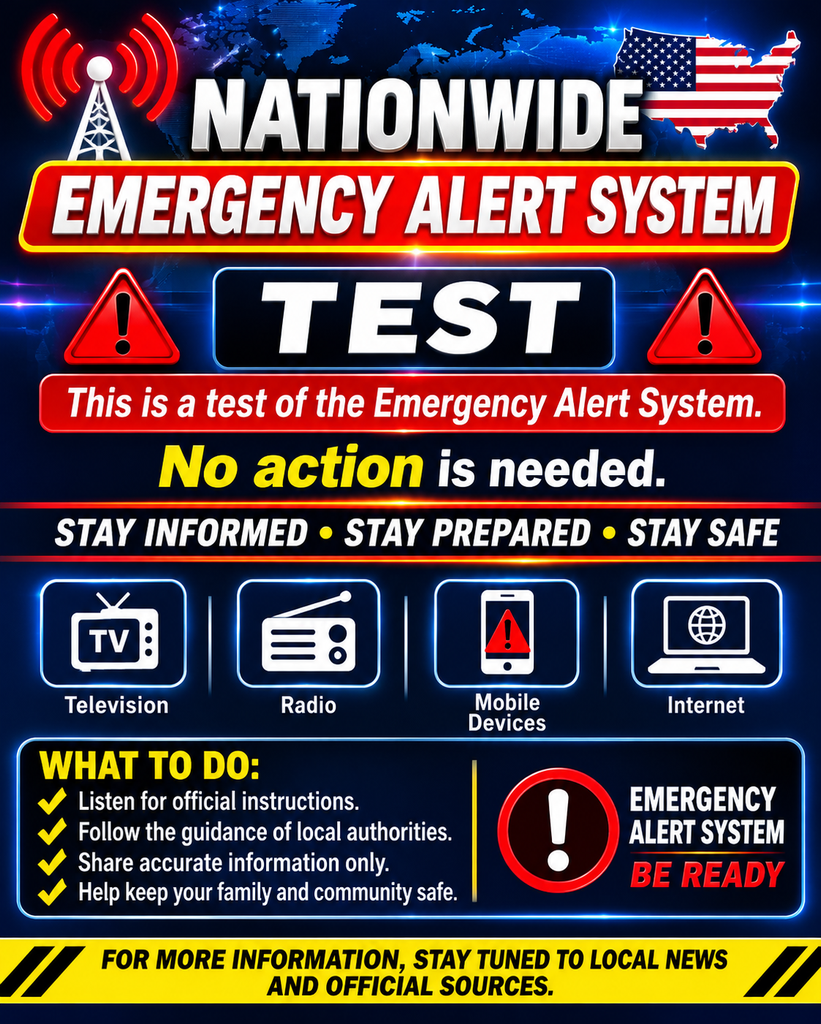
On Tuesday (November 17, 2026) both agencies will perform a nationwide test of the Emergency Alert System (EAS). This is expected to disrupt television and radio broadcasts around 2.20 p.m. Eastern Time. Unlike last year’s nationwide test in 2023, there will be no test alerts sent to cellphones this year.
What Is the Emergency Alert System?
The Emergency Alert System (EAS) is a national alerting system which enables authorised authorities to send emergency messages to radio, TV, cable, satellite and wireline video service providers.
This enables urgent information to be passed on to people who need to take action. If there were an emergency, they could use the emergency broadcasts to pass on instructions for people to evacuate, severe weather warnings, serious threats to public safety or important national information.
FEMA work with the FCC and communication providers to coordinate the system. It can also enable the President to speak to the American public in the case of a national emergency.
FEMA Emergency Alert System Test: November 17, 2026
FEMA, working with the FCC, has scheduled a nationwide EAS test for Tuesday, November 17, 2026, at approximately 2:20 p.m. Eastern Time.
The exercise will evaluate whether participating television and radio providers can receive and distribute a national emergency test message correctly.
The planned schedule is:
| US time zone | Test time |
|---|---|
| Eastern (ET) | 2:20 p.m. |
| Central (CT) | 1:20 p.m. |
| Mountain (MT) | 12:20 p.m. |
| Pacific (PT) | 11:20 a.m. |
The test message is expected to interrupt regular programming for approximately one minute. Once the broadcast finishes, normal television and radio programming will resume.
If conditions require postponement, December 3, 2026, is the scheduled backup date.
Will the Emergency Alert System Test Send Notifications to Phones?
No. On November 17, the nationwide test will only test the broadcast Emergency Alert System. There will be no nationwide WEA test.
Unlike on October 4, 2023, when FEMA conducted a nationwide test of the EAS and WEA systems, and those with compatible mobile phones received an emergency test alert.
In 2026 the exercise will involve participating TV, radio, cable, satellite and wireline video providers. You shouldn’t expect to receive any nationwide test alert on your mobile phone.
However, this does not mean that you can no longer receive emergency alerts on your cellphone. In the event of an emergency authorities can still send real Wireless Emergency Alerts.
How Does the US Emergency Alert System Work?
The United States uses an interconnected alerting infrastructure known as the Integrated Public Alert and Warning System (IPAWS).
FEMA manages IPAWS, which provides authorized federal, state, local, tribal and territorial authorities with a way to distribute emergency information through several communication channels.
Its major alerting methods include:
1. Emergency Alert System (EAS)
EAS distributes emergency messages through participating radio and television broadcasters, cable systems, satellite services and other covered video providers.
2. Wireless Emergency Alerts (WEA)
WEA delivers geographically targeted emergency notifications to compatible mobile devices through participating wireless providers. These alerts can warn people about dangerous weather, AMBER Alerts and imminent public safety threats.
3. NOAA Weather Radio
NOAA Weather Radio broadcasts weather warnings, watches and other authorized emergency information through compatible receivers.
4. Other Public Alerting Channels
IPAWS can also support connected alerting applications, digital signage, public announcement systems and other compatible communication technologies.
These channels help authorities reach people through different communication methods, depending on the emergency and the affected location.
Why Does FEMA Test the Emergency Alert System?
Testing allows officials to identify any technical issues.
If an emergency message is unable to be received and disseminated by a broadcast service that may cause a delay in providing vital information to the public.
Regular testing ensures that all the communication services involved are prepared and ready to send out emergency messages.
Under Federal law FEMA must complete nationwide testing of public alert and warning capabilities every three years.
This means that the testing on 17th November is not an actual declaration of a national emergency.
What Should Americans Do When They Receive an Emergency Alert?
People should read or listen carefully to emergency notifications and follow instructions from authorized public safety officials.
If you receive an actual emergency notification:
- Check the message for the affected location and type of threat.
- Follow official instructions, including evacuation or shelter guidance.
- Monitor local authorities and reliable news sources for updates.
- Keep a battery-powered or backup-powered radio available when possible.
- Do not ignore emergency warnings simply because they arrive unexpectedly.
During the November 17 nationwide test, however, no action is required from the public.
Conclusion
The emergency alert system is crucial in getting critical information out to people in the United States.
During the FEMA drill on November 17, 2026, the National Emergency Alert System will be tested, at around 2.20pm Eastern Time. However, because it does not involve Wireless Emergency Alerts you will not receive a national alert on your phone.
Knowing the difference between EAS, WEA and IPAWS can help identify emergency alerts and respond correctly in a real situation.
FAQS
1. What is the emergency alert system in the USA?
It is a national public warning system that distributes emergency messages through television, radio, cable, satellite and other participating communication providers.
2. What time is the FEMA emergency alert test on November 17, 2026?
The nationwide test is scheduled for 2:20 p.m. Eastern Time, 1:20 p.m. Central, 12:20 p.m. Mountain and 11:20 a.m. Pacific.
3. Will my phone receive an emergency alert test on November 17?
No. The scheduled 2026 nationwide exercise tests EAS broadcasts, not Wireless Emergency Alerts on mobile phones.
4. What is the difference between EAS and WEA?
EAS distributes emergency messages through television and radio providers, while WEA sends geographically targeted notifications to compatible mobile phones.
5. Who controls the US emergency alert system?
FEMA coordinates the national alerting infrastructure, including IPAWS, while the FCC regulates the Emergency Alert System and participating communications providers.