

Earthquake Today: Latest Updates, Magnitude, Locations and Safety Tips
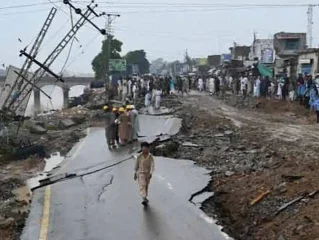
People searching for an earthquake today want to know where an earthquake has occurred, how strong it was, whether people felt the shaking, and whether officials have issued any warnings.
Where to Watch the Ballon d’Or Ceremony Live Online
Earthquakes happen around the world every day. Some are too small for people to notice, while stronger earthquakes can damage buildings, disrupt transportation, and trigger landslides or tsunamis in certain circumstances.
To check the latest earthquake activity, readers can use the live earthquake map published by the U.S. Geological Survey (USGS). The map provides information about recorded earthquakes, including their locations, magnitudes, depths, and reported effects.
Latest earthquake information: Check the USGS Latest Earthquakes map for current reports. Earthquake information can change as monitoring agencies review preliminary measurements.
Earthquake Today: Latest Worldwide Updates
Earthquake activity is monitored by geological agencies around the world. Their monitoring systems help scientists identify seismic events and estimate their magnitude, depth, and location.
According to the USGS significant-earthquake listings available for this update, recent events included earthquakes near Vanuatu in the South Pacific and the Bonin Islands region of Japan on October 24–25, 2026.
The USGS also listed a magnitude 7.0 earthquake near Nagqu, China, on October 22, 2026. These are recent reported events and should not be described as earthquakes that occurred today.
For the newest information, check the live earthquake catalog rather than relying on an older news article. Preliminary magnitude estimates and locations can be revised when additional data becomes available.
What Information Should You Check Earthquake Today?
When reviewing an earthquake report, look for these details:
- Magnitude: The estimated size of the earthquake.
- Location: The epicenter or the reported distance and direction from a nearby town or city.
- Depth: How far below Earth’s surface the earthquake began.
- Time: When the earthquake occurred, including the time zone.
- Felt reports: Whether people reported experiencing shaking.
- Damage reports: Whether authorities or reliable news organizations have confirmed damage or injuries.
- Warnings: Whether an official agency has issued a tsunami warning or other emergency alert.
Not every earthquake causes damage. The effects depend on factors such as magnitude, depth, distance from populated areas, local ground conditions, and the strength of buildings.
Where Can You Check Earthquakes Today?
Several official resources can help readers find earthquake reports and safety information.
USGS Latest Earthquakes
The USGS provides a worldwide earthquake map and searchable catalogue. Users can explore recent earthquakes and review information about individual events.
Visit: USGS Latest Earthquakes
Earthquake Today
People in Pakistan can check seismic information through the Pakistan Meteorological Department (PMD), which provides earthquake-related updates and other meteorological information.
Visit: Pakistan Meteorological Department
When checking an earthquake report for Pakistan, confirm the location, magnitude, time, and depth through an official source. Social media posts and forwarded messages may contain incorrect locations or outdated measurements.
Earthquake Information for Other Countries
Readers can also consult their national geological survey, emergency management agency, or official disaster-response authority. These agencies may publish local alerts, evacuation guidance, and information about affected communities.
For events near coastlines, follow the relevant official tsunami warning authority. An earthquake does not automatically mean a tsunami will occur.
What Does Earthquake Magnitude Mean?
Magnitude describes the size of an earthquake based on measurements of seismic waves and other data. Modern earthquake reporting commonly uses the moment magnitude scale, abbreviated as Mw.
Magnitude is logarithmic, meaning that a change of one whole magnitude unit represents a substantial increase in the measured earthquake size.
| Magnitude | General description |
|---|---|
| Below 2.0 | Usually very small; often not felt |
| 2.0–3.9 | Small earthquakes; some may be felt near the epicenter |
| 4.0–4.9 | Light to moderate shaking may be felt |
| 5.0–5.9 | Can cause damage, particularly in vulnerable buildings |
| 6.0–6.9 | Strong earthquake with potential for significant damage |
| 7.0 and above | Major earthquake that can cause widespread damage, depending on location and conditions |
These descriptions are general guidelines, not guarantees of what will happen in a particular place. A shallow earthquake near a populated area may cause more damage than a deeper earthquake of similar magnitude far from communities.
The magnitude alone does not tell the full story. Scientists and emergency officials also consider depth, distance, ground conditions, building construction, and observed impacts.
Why Do Earthquakes Happen?
Earthquakes occur when energy stored in Earth’s crust is released, usually as rocks move along faults. The resulting energy travels through the ground as seismic waves, which can cause shaking at the surface.
Earth’s outer shell consists of large tectonic plates that move slowly over time. Stress can build up where these plates interact. When rocks suddenly slip along a fault, an earthquake occurs.
There are several common causes or settings associated with earthquakes:
- Tectonic movement: Movement along faults as tectonic plates interact.
- Subduction zones: Areas where one tectonic plate moves beneath another. These regions can produce powerful earthquakes.
- Shallow crustal faults: Faults closer to Earth’s surface that may cause strong local shaking.
- Volcanic activity: Movement of magma and related processes can generate earthquakes.
- Human-related activity: Certain industrial activities can trigger earthquakes under specific geological conditions.
Earthquakes cannot currently be predicted precisely enough to tell the public the exact date, time, location, and magnitude of a future event. Be cautious of social media claims promising an exact earthquake prediction.
What Should You Do During an Earthquake?
If the ground starts shaking, your immediate priority is to protect yourself from falling objects, broken glass, and structural hazards.
If You Are Indoors
- Drop, cover, and hold on. Get down on your hands and knees, take cover under a sturdy table or desk if possible, and hold on until the shaking stops.
- Protect your head and neck with your arms if you cannot find suitable cover.
- Stay away from windows, glass, exterior walls, and heavy furniture that could fall.
- Do not run outside while the building is shaking.
- Avoid elevators during and immediately after the earthquake.
If You Are Outdoors
Move away from buildings, walls, trees, streetlights, and overhead power lines if you can do so safely. Stay in an open area until the shaking stops.
If You Are Driving
Pull over in a safe place away from bridges, overpasses, buildings, and power lines. Set the parking brake and remain inside the vehicle until the shaking ends, unless staying there creates an immediate danger.
If You Are Near the Coast
If you experience strong or prolonged shaking near the coast, or authorities issue a tsunami warning, move to higher ground or inland according to local emergency instructions. Do not wait for a warning siren if local guidance says to evacuate immediately after strong coastal shaking.
What Should You Do After an Earthquake?
After the shaking stops, remain alert because aftershocks may occur. Some aftershocks can be strong enough to damage already weakened structures.
Follow these precautions:
- Check yourself and others for injuries and contact emergency services when needed.
- Leave a damaged building carefully if it is safe to do so.
- Avoid damaged walls, fallen power lines, and areas where debris may fall.
- If you smell gas or suspect a leak, leave the area and contact the appropriate emergency service from a safe location.
- Use text messages when phone networks are congested, if possible.
- Follow official instructions about evacuation, road closures, and returning to buildings.
- Do not spread unverified reports about casualties, damage, or additional earthquakes.
If a building has visible structural damage, do not re-enter until qualified authorities have determined that it is safe.
Can an Earthquake Cause a Tsunami?
Yes. Certain undersea earthquakes can generate tsunamis, especially when they cause significant vertical displacement of the seafloor. However, not every undersea earthquake produces a tsunami.
The risk depends on the earthquake’s magnitude, depth, location, and the way the seafloor moves.
If an official tsunami warning is issued for your area, follow the instructions from local emergency authorities immediately. Move away from the coast and toward designated high ground or evacuation areas.
Do not return to the shoreline just because the first wave has passed. Tsunami waves can arrive in multiple surges, and later waves may be more dangerous than the first.
For reliable alerts, consult the official tsunami warning authority responsible for your region.
Why Do Earthquakes Occur So Frequently?
Earthquakes are a natural part of Earth’s geological activity. Faults exist in many parts of the world, and tectonic plates are continuously moving.
Most recorded earthquakes are small. Modern monitoring networks detect many events that people never feel. The number of earthquakes recorded on a particular day can vary because of natural seismic activity, monitoring coverage, and reporting thresholds.
An increase in earthquake reports does not automatically mean that a major earthquake is imminent. Scientists assess seismic patterns using established methods, but individual earthquakes cannot be used to make reliable claims about the exact timing of a future disaster.
Frequently Asked Questions About Earthquake Today
Where can I check earthquake today updates?
You can check the USGS Latest Earthquakes map for recent worldwide events. For local alerts, consult the geological survey or official emergency agency responsible for your country.
How can I find the magnitude of an earthquake?
Look up the event in an official earthquake catalog. Its event details may include magnitude, depth, location, origin time, and reports of shaking. Preliminary values can change after further analysis.
Can small earthquakes cause damage?
Small earthquakes generally cause little or no damage, but the effects depend on local conditions. Vulnerable buildings, shallow depths, and proximity to the epicenter can influence the impact.
What is the difference between magnitude and intensity?
Magnitude describes the size of the earthquake at its source. Intensity describes the shaking and effects experienced at a particular location. One earthquake has a magnitude estimate but can produce different intensities in different places.
Can scientists predict earthquakes?
Scientists can identify earthquake-prone regions and estimate long-term hazards, but they cannot reliably predict the exact time, location, and magnitude of a future earthquake.
Are aftershocks dangerous?
Aftershocks can be dangerous, especially when an earlier earthquake has weakened buildings or infrastructure. Follow local safety advice and avoid damaged structures.
Does every earthquake cause a tsunami?
No. Tsunamis are associated with certain undersea events that displace large amounts of water. Follow official tsunami alerts if an earthquake occurs near the coast.
Final Thoughts
Searching for earthquake today is a way to find current seismic reports, but the most useful information comes from official monitoring agencies and emergency authorities.
Check the event’s location, magnitude, depth, and time, and look for confirmed information about damage or warnings. If you feel shaking, protect yourself first and follow local emergency instructions.
For the latest worldwide earthquake reports, visit the USGS Latest Earthquakes map. Because new events are recorded continuously and preliminary information may change, update this article whenever a significant event is confirmed by a reliable source.
Safety note: This article provides general information and is not a substitute for emergency instructions from local authorities.