
Coreweave Stock: bond yields reach approximately 15%
CoreWeave stock fell sharply on October 14, 2026, as investors raised concerns about the cost of financing the company’s rapid expansion in artificial intelligence infrastructure. Shares dropped approximately 15.5% to close at $65.78, while yields on some of its corporate bonds approached 15%.
The sell-off brought a financial question into focus: can AI infrastructure companies continue investing billions of dollars in computing capacity without allowing debt and borrowing costs to put pressure on their businesses?
CoreWeave operates in a market where demand for computing power creates significant growth opportunities. However, building data centres, purchasing specialised chips and securing reliable electricity requires substantial investment. Investors are now weighing the company’s contracted business against the cost of delivering those commitments.
The latest decline in CoreWeave stock highlights why financial strength matters alongside growth potential. Demand for AI computing may remain strong, but companies must still manage their expenses, financing and cash flow.
Latest news in the world
Why Is CoreWeave Stock Falling?

The recent decline in CoreWeave stock reflects concerns about rising borrowing costs, debt obligations and the amount of capital needed to expand its infrastructure.
CoreWeave provides cloud computing services for businesses developing and operating artificial intelligence systems. Its infrastructure uses specialised processors, networking equipment and data-centre capacity to support demanding computing workloads.
Expanding this business requires significant upfront spending. A company may need to purchase equipment and prepare facilities well before it receives all the revenue expected from those investments. Borrowing can help fund that expansion, but it also creates interest payments and repayment obligations.
Investors have become more cautious about the cost of financing CoreWeave’s growth. Higher yields on certain bonds suggest that lenders are demanding greater compensation for the risks they perceive.
This does not automatically mean that CoreWeave cannot meet its financial obligations. However, it puts greater attention on whether future revenue and cash flow can support the company’s investment plans.
For shareholders, the main concern is whether business growth will translate into sustainable financial returns rather than simply requiring more spending and borrowing.
CoreWeave Stock and Bond Yields Near 15%
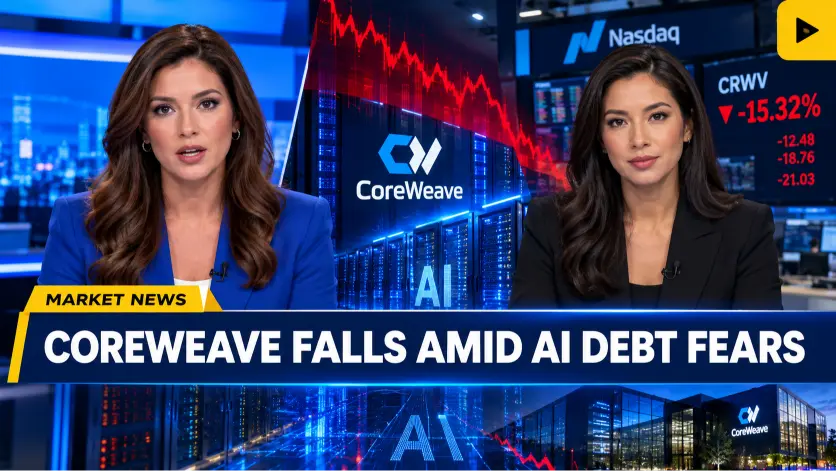
Bond yields have become an important part of the discussion surrounding CoreWeave stock.
Market reports on October 14 indicated that yields on certain CoreWeave bonds due in 2031 and 2032 approached 15%. The company’s 9.625% notes maturing in 2032 were among the bonds discussed in those reports.
To understand the significance of these figures, it helps to distinguish between a bond’s coupon rate and its yield to maturity.
- Coupon rate: The stated interest rate used to calculate the bond’s scheduled interest payments.
- Yield to maturity: The annualised return a buyer may receive at the current market price if the bond is held until maturity and the required payments are made.
When a bond’s market price falls, its yield generally rises. A yield approaching 15% therefore does not mean that every existing CoreWeave bond now carries a 15% coupon.
However, elevated yields can make future borrowing or refinancing more expensive if the company needs to obtain financing under similar market conditions. They can also indicate that investors perceive greater financial risk.
For CoreWeave stockholders, this matters because higher financing costs can reduce the cash available for other business needs. The company may have to balance its expansion plans against the cost of obtaining capital.
How AI Infrastructure Spending Affects CoreWeave Stock
Artificial intelligence has created demand for powerful computing infrastructure. Businesses developing AI models and applications need processors, data-centre capacity and reliable systems to handle increasingly demanding workloads.
CoreWeave aims to benefit from this demand by providing specialised cloud computing services. Customer contracts can give the company greater visibility into future business and help it plan investments in computing capacity.
However, demand alone does not guarantee profitability.
Data centres are expensive to build and operate. Companies must manage equipment purchases, construction schedules, electricity consumption, cooling systems, maintenance and financing costs. Delays or unexpected expenses can affect the financial returns from new infrastructure.
If CoreWeave completes projects on time and customers use the capacity they have contracted for, its investments could support revenue growth. If costs rise, projects are delayed or customers change their spending plans, the financial pressure could increase.
This is an important consideration for CoreWeave stock investors. The company’s growth prospects depend not only on the demand for AI computing but also on how efficiently it turns that demand into revenue and cash flow.
Debt, Interest Expense and Cash Flow
Debt is central to understanding CoreWeave’s financial position.
Borrowing allows a company to expand more quickly than it might using existing cash alone. However, debt also creates interest payments and repayment obligations that must be managed even when market conditions become less favourable.
CoreWeave reported net interest expense of approximately $640 million in the second quarter of 2026, compared with about $267 million in the same period a year earlier. This increase highlights the importance of financing costs as the business grows.
Investors need to examine more than revenue when assessing the company’s financial performance. Operating expenses, capital expenditure, cash flow and future debt repayments are also important.
Debt figures should be interpreted carefully because different reports may count direct borrowings, lease liabilities and other obligations differently. Investors should consult the company’s financial statements to understand exactly what a reported total includes.
A business can generate substantial revenue and still require significant cash to build infrastructure, acquire equipment and fulfil customer contracts. The timing of these expenses can make cash management particularly important.
For CoreWeave stock, a key question is whether the company can generate enough cash from its operations to support its infrastructure investments and financial commitments over time.
What Does CoreWeave’s $104 Billion Backlog Mean?
CoreWeave has highlighted its substantial revenue backlog as evidence of demand for its services.
The company reported a backlog of approximately $104 billion at the end of the second quarter of 2026. It also announced more than $25 billion in additional net new customer commitments in early Q3.
A backlog represents contracted business expected to be delivered over time. It can provide useful information about future demand, but it should not be confused with cash already received, annual revenue or guaranteed profit.
CoreWeave must still provide the computing capacity required under its agreements. That means investing in infrastructure, managing operating expenses and delivering services according to customer requirements.
The timing of revenue and spending also matters. The company may need to invest in equipment and facilities before it recognises all the revenue associated with a contract.
For this reason, the backlog is only one part of the financial picture. Investors also need to consider the cost of fulfilling contracts, the timing of payments and the cash generated from completed work.
The $104 billion figure helps explain the scale of CoreWeave’s contracted business, but it does not eliminate concerns about debt or financing costs.
Why the CoreWeave Sell-Off Matters for the AI Market
The decline in CoreWeave stock has drawn attention to the financial challenges facing companies that are investing heavily in AI infrastructure.
Market reports on October 14 also described weakness in other technology and AI-related shares, including Oracle and Nebius. These movements reflected broader concerns about financing costs and the amount of capital required to expand computing infrastructure.
The issue extends beyond one company. AI infrastructure requires substantial investment, while the financial returns from new facilities may take time to develop. Companies that rely heavily on borrowing can face greater pressure when lenders demand higher returns or financing becomes less accessible.
However, not every technology company faces the same level of risk. Businesses differ in their cash reserves, debt obligations, customer contracts and ability to fund expansion from existing operations.
The CoreWeave sell-off illustrates why investors are examining balance sheets and borrowing costs alongside the long-term growth potential of artificial intelligence.
It also highlights a distinction between demand for AI services and the profitability of supplying them. Strong demand can create opportunities, but companies still need to manage the cost of meeting that demand.
What Could Happen Next to CoreWeave Stock?
The future direction of Core Weave stock will depend on several factors. No single financial indicator can reliably predict the next share-price movement.
Quarterly Results and Financial Guidance
Investors will watch future results for updates on revenue, operating expenses, capital spending and cash flow. Strong growth may support confidence, but investors will also want evidence that the company is managing the cost of expansion effectively.
Borrowing Costs and Access to Financing
Bond yields and the terms available for future borrowing will remain important. If financing becomes more expensive, CoreWeave may need to reconsider the timing of certain investments or explore alternative funding arrangements.
More favourable financing conditions could ease some pressure, although they would not remove the company’s operating and execution risks.
Customer Demand and Contract Delivery
Continued demand for AI computing could support the company’s long-term business. Investors will also look for evidence that contracted commitments are being converted into delivered services, recognised revenue and cash flow.
Broader Market Conditions
Interest-rate expectations, investor confidence and sentiment toward technology stocks can all affect CoreWeave stock. Even positive company news may not prevent volatility during a broader market downturn.
These factors could support a recovery or contribute to further declines. The timing and direction of future share-price movements remain uncertain.
Is CoreWeave Stock a Risky Investment?
CoreWeave stock carries risks associated with a capital-intensive business operating in a rapidly developing industry.
The company’s opportunities are connected to demand for AI computing, but its financial performance also depends on infrastructure costs, financing conditions and the successful delivery of customer contracts.
Several risks deserve attention:
- Rising interest expense: Higher financing costs can put pressure on cash flow.
- Construction delays: Delayed facilities or equipment deliveries may affect the timing of revenue.
- Changing customer demand: A slowdown in AI spending could affect future growth expectations.
- Customer concentration: Dependence on a limited number of major customers can increase exposure to changes in their spending plans.
- Financing challenges: Expensive or less accessible borrowing could make future expansion more difficult.
The company’s substantial backlog provides visibility into contracted business, but it does not remove these risks. Investors need to consider how much it costs to fulfil contracts and how quickly the company can turn revenue into cash.
A sharp decline in the share price does not automatically make a stock undervalued. Its value depends on future financial performance, the risks involved and the price investors are willing to pay.
Anyone considering CoreWeave stock should review the company’s latest financial reports, assess the potential downside and determine whether the investment fits their financial circumstances and tolerance for risk.
Frequently Asked Questions About CoreWeave Stock
Why did CoreWeave stock fall on October 14, 2026?
CoreWeave stock fell approximately 15.5% to $65.78 amid concerns about rising bond yields, debt obligations and the cost of financing the company’s AI infrastructure expansion.
Why did CoreWeave bond yields approach 15%?
Some of the company’s bonds fell in market price, pushing their yields higher. This indicated that bond investors were demanding greater returns for the risks they perceived.
Does a 15% bond yield mean CoreWeave pays 15% interest on all its debt?
No. Yield to maturity differs from a bond’s stated coupon rate, and individual loans and bonds have different terms. Market yields can change as bond prices move.
What is CoreWeave’s revenue backlog?
CoreWeave reported a backlog of approximately $104 billion at the end of the second quarter of 2026. It represents contracted business expected to be delivered over time, not cash already received or guaranteed profit.
Can CoreWeave stock recover?
A recovery is possible, but it is not guaranteed. Future performance may depend on financial results, cash flow, borrowing costs, customer demand and broader market conditions.
What should investors watch next?
Investors should monitor quarterly results, interest expense, capital spending, cash flow, debt obligations, bond yields and updates about customer contracts.
Final Thoughts on CoreWeave Stock
The October 14 sell-off highlighted the financial challenges that can accompany rapid growth in AI infrastructure. CoreWeave has a substantial backlog of contracted business, but investors are questioning how effectively the company can turn that demand into sustainable financial returns.
Rising bond yields have placed financing costs at the centre of the discussion. For a company investing heavily in data centres and computing equipment, managing debt while delivering customer commitments is an important part of its long-term outlook.
Going forward, CoreWeave stock may remain sensitive to financial results, cash generation, borrowing conditions and investor expectations for AI infrastructure spending. The most useful indicators to watch are the company’s progress in delivering contracts, managing expenses and generating cash to support its growth.
Disclaimer: This article is for informational and educational purposes only and does not constitute financial or investment advice. Stock prices and bond yields can change quickly. Readers should consult reliable financial sources and conduct their own research before making investment decisions.