
Clarence Thomas’s First Amendment Warning as Supreme Court Rejects Doctors’ Case
Justice Thomas’s First Amendment Warning voiced new concerns about the power of the government to interfere with private speech after the US Supreme Court refused to take a case challenging California’s medical training requirements. In his dissent on 16 November 2026, Thomas said the government should not always strip away First Amendment protections if they regulate private teachers.
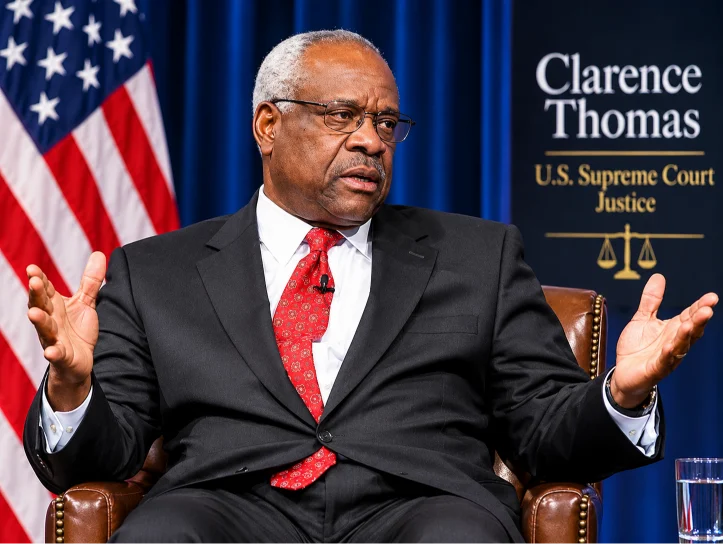
In Khatibi v Yip, Thomas (along with Justice Samuel Alito) disagreed with the decision not to take the case. The law in California requires Continuing Medical Education (CME) courses to include information on unconscious bias in healthcare. Justice Neil Gorsuch also suggested he would have accepted the appeal but did not sign Thomas’ written dissent.
The decision has shed new light on how much power the government has and what constitutional rights professionals teaching on privately organised courses have.
Why Did Clarence Thomas Raise First Amendment Concerns?
California requires licensed physicians to complete 50 hours of accredited medical continuing education every two years. But in 2019 the state introduced a new requirement to the courses that doctors must take, which includes implicit bias training and how this can affect healthcare decisions and patients.
This has been challenged by Dr Azadeh Khatibi, an ophthalmic doctor in California who develops and delivers medical education courses, along with medical advocacy group Do No Harm. This case was also brought by the late Dr Marilyn Singleton.
Khatibi claims the State is requiring private teachers to deliver specific messaging as part of their course, which they may not agree with or feel is unrelated to their medical topic.
Khatibi delivers courses on topics such as Retinal Tumours and Glaucoma. The issue is that California are trying to require teachers to deliver the state’s preferred information, which they may not want to do without infringing upon their First Amendment rights.
What Did the Supreme Court Decide?
Thomas’s First Amendment Warning On November 16, 2026, the Supreme Court declined to take up the case, meaning that the lower court decision stands.
The Ninth Circuit had determined that CME courses allowing state credit can be considered government speech given that medical education is regulated by California.
However, Thomas argued that just because there is a great deal of government regulation this doesn’t mean that private educational material becomes government speech.
“The First Amendment does not permit States to ‘extinguish’ the right of free speech simply because they heavily regulate an activity,” Thomas wrote in his dissent.
Thomas’s Warning About Government-Controlled Speech
An important part of Thomas’ argument is distinguishing between government speech and private speech.
Although the government has a right to inform those of its policies and stances, Thomas questions whether the state should have the power to control messages through its regulatory powers.
Thomas also argues that the Ninth Circuit got it wrong in applying the Supreme Court’s previous decision in Shurtleff v. Boston, where it identified several factors to consider when determining whether a message constitutes government speech. These include looking at history, the public’s view of the speaker and the degree of governmental control.
Thomas warns that this method from the lower court may cause further issues. For example, requiring the state to put messages regarding abortion, gender transition surgery and racial preferences into messages at legal conferences.
This was just an example to illustrate his constitutional concerns. It does not mean California currently requires these messages.
Alito and Gorsuch Take Different Positions
Justice Samuel Alito joined Thomas’s written dissent, supporting the argument that the Court should examine the First Amendment issue.
Justice Neil Gorsuch also indicated that he would have granted the petition, meaning he wanted the Supreme Court to take the case. However, he did not join Thomas’s written dissent.
The distinction matters because the justices agreed that the case deserved consideration, but they did not all sign the same written opinion.
Thomas Also Raises Questions About Maryland’s Gun Restrictions
Thomas’s First Amendment Warning also released a separate statement on the same day related to another Supreme Court case called Novotny v. Moore. This case concerns Maryland’s laws relating to the carrying of firearms in public.
Maryland has laws which prevent people carrying firearms in some situations including public protests, public transport, healthcare, public bars and some state parks and forests.
The Supreme Court refused to take this case. Thomas commented that he was “sceptical” that all of these restrictions were in line with the country’s history of regulating firearms.
Thomas went onto explain that there were a range of restrictions being challenged therefore it was difficult for the court to look at the case as a whole. He suggested that instead of the court taking this wide ranging case they should consider the issue in a more specific case in the future.
This was unrelated to Thomas’s First Amendment dissent in the California medical education case. This was an entirely separate case regarding the Second Amendment.
What Happens Next?
The Supreme Court’s refusal to hear Khatibi v. Yip leaves the lower court’s decision standing. It does not establish that California’s requirement is constitutional in every possible circumstance, nor does it create a new Supreme Court ruling on compelled speech.
Thomas’s dissent, however, highlights an ongoing legal debate about the boundary between government regulation and private expression.
His separate statement in Novotny v. Moore also shows that he has concerns about how broadly states can restrict constitutional rights in public spaces.
For now, neither statement changes the outcome of the cases. But both provide insight into the constitutional questions Thomas believes the Supreme Court may need to examine in future disputes.
Frequently Asked Questions
1. What is Clarence Thomas’s First Amendment warning about?
Thomas warned that government regulation should not automatically turn private speech into government speech or remove First Amendment protections.
2. Why did the Supreme Court reject the California doctors’ case?
The Supreme Court declined to grant the petition for review. It did not issue a decision on the constitutional merits of the challenge.
3. Did Samuel Alito join Clarence Thomas’s dissent?
Yes. Justice Samuel Alito joined Thomas’s written dissent in Khatibi v. Yip.
4. Did Neil Gorsuch support hearing the case?
Yes. Gorsuch indicated that he would have granted the petition, but he did not join Thomas’s written dissent.
5. What did Clarence Thomas say about Maryland’s gun laws?
In a separate case, Thomas questioned whether Maryland’s broad restrictions on carrying firearms in public places were consistent with the historical tradition of firearm regulation.
6. Did the Supreme Court strike down California’s implicit-bias training requirement?
No. The Court declined to hear the case, leaving the lower court’s decision in place.